Two Hundred Fifty Years of Freedom… And Fifty Years of Mine

On America’s 250th birthday, I am still that baby on the highway, still the boy churning ice cream in Verne’s yard.


This Fourth of July, America turns two hundred fifty. And when I think of this holiday, I don’t think of fireworks on a screen or a parade on television. I think of Verne’s house.

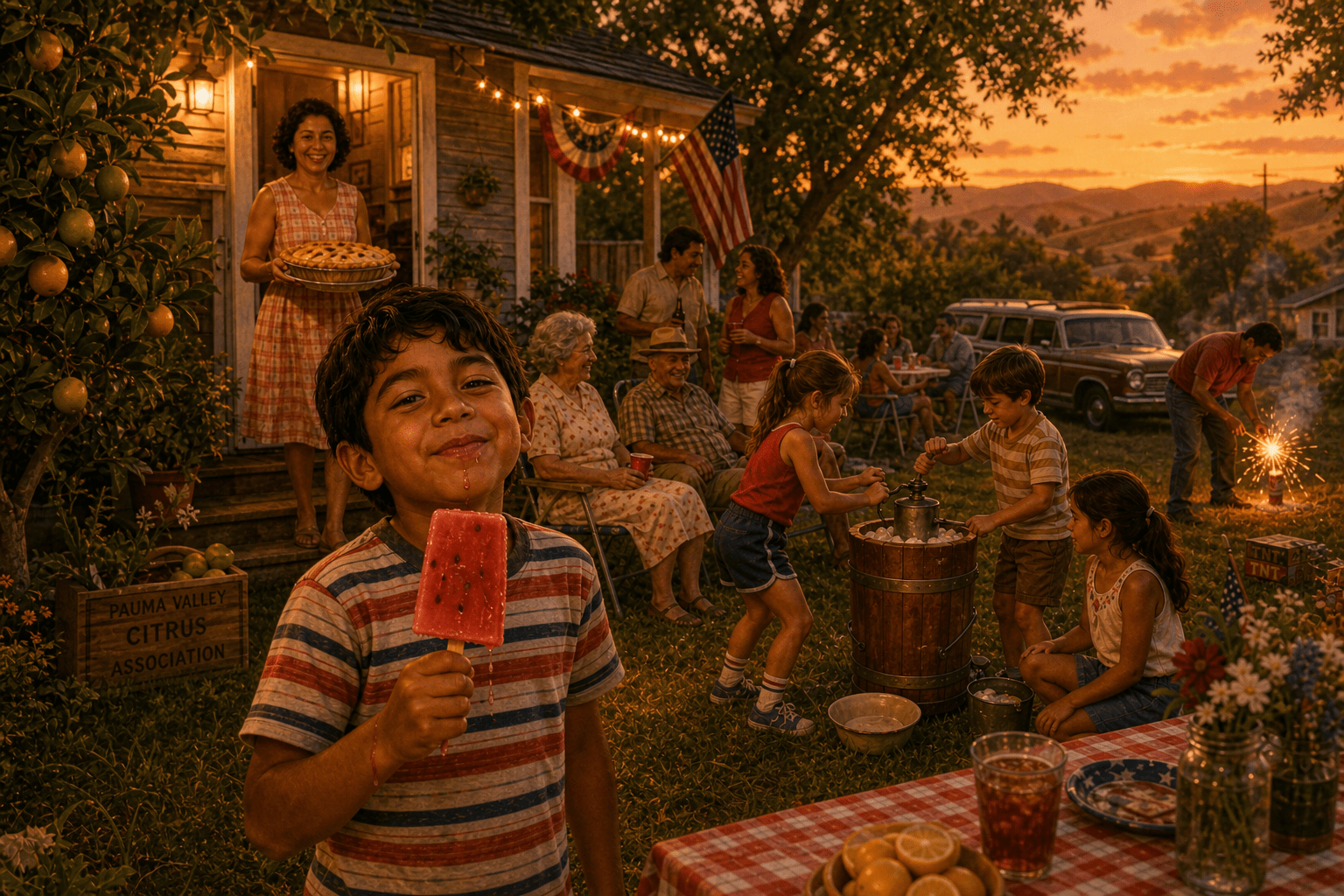
Verne would invite everyone. His children, his grandchildren, my parents, my sister, and me, all crowded into his yard on the Fourth. We took turns churning the ice cream by hand, the crank turning slower and slower as it froze, while Joyce carried out peach pies she’d made from the peaches growing on the trees behind their house. When it got dark, Verne brought out fireworks of his own, more enthusiasm than permit, until the firefighters showed up to have a word with him.

Verne and his entire family were Caucasian. My parents and I did not look like them, and they did not look like us. There was no pretending otherwise, not in that yard, not in that decade. But nobody in that gathering treated us like guests who had wandered in. We were treated like family. As if to say, without ever saying it out loud, immigrants belong in America.

I was not born in this country. But on afternoons like that, I was being remade in it. Somewhere between the hand crank and the peach pie and the fireworks that got Verne in trouble, I was not just living in America. I was becoming American.

On America’s 250th birthday, I am still that baby on the highway, still the boy churning ice cream in Verne’s yard.

But this year carries a second anniversary for me. Quieter. Personal. Not written into any history book but mine.
Fifty years ago, my parents brought me to the United States. I was a baby. I don’t remember the journey. I only know it because it was told to me, the way the most important parts of our story usually are… by the people who lived it before us.

The Highway
My parents crossed the Mexican American border on foot, carrying me. I was one year old. They walked into the unknown, into a highway near Julian, California, with little idea of the terrain ahead, the people, the language, or what waited for them on the other side. It is the same leap anyone takes when they step from the known into the unknown. Only this leap was made with a baby in their arms and no map for what came next.
My father waved a car down on the side of that highway.

A man stopped. A stranger with no reason to help, no obligation, no expectation of anything in return. Years later, my father would learn the only reason the man stopped at all was because he saw me, the baby, in my mother’s arms.

He picked us up and drove us to the Rincon Indian Reservation, just off Highway 76, in what is known today as Funner, California, near Pauma Valley. A place we had never heard of, among people we had never met, and yet it became the ground where our life in this country began.

I have spent my life trying to be worthy of that decision.

The People Who Believed Before I Could Prove Anything
That unnamed man was only the beginning.

There were Verne and Joyce Maynard, and Albert “Bud” and Penny Bradford, and Sherman Johnson, the managers of the immigrant camp where we found shelter when we had none. They did not know what I would become. They could not have known. There was nothing to see yet, no résumé, no promise fulfilled. Just a family that needed someone to believe in them before there was any evidence belief was warranted.

The shelter itself had no furniture. Bare walls, a bare floor, a family sleeping wherever there was room to sleep. That was the whole of what we arrived to. But we did not stay long, because my father moved us onto the Maynard farm not long after, into a small trailer home that suddenly felt like the beginning of something instead of the end of it.

The people who shape us most are rarely the ones who show up after we have proven ourselves. They are the ones who show up before.

And there was the paleta de sandía. I don’t remember much else from those earliest years, but I remember that. A watermelon popsicle, seeds and all, melting fast in the heat, sweet and cold and a little messy in a child’s hands. Even the seeds meant something. To this day, they carry a symbolic weight for me, small dark specks inside something sweet, life and possibility embedded in the simplest gift. That paleta did not stay behind in the camp. It kept finding its way back into my childhood, uninvited, at odd moments, the way the truest memories do. A small, ordinary kindness that a child does not forget, even when everything else about that time is a blur. Sometimes that is how grace arrives. Not as a grand gesture, but as a paleta shared with a family that had nothing, on a farm that had room for one more.

That is the part I have come to understand only with age. The people who shape us most are rarely the ones who show up after we have proven ourselves. They are the ones who show up before. Sometimes they show up with a spare trailer and a slice of watermelon, and that is enough to change the direction of a life.

Decades later, that same kind of belief found me again. At USC, where a Spanish Literature and Linguistics degree became the beginning of a career I could not have mapped out at eighteen. At Michigan Ross, where an EMBA classroom became the place I learned to lead, not just manage. Through John Hawkins, my predecessor, who saw something in a twenty something entry level employee and made room for it to grow across nearly three decades.

None of it was owed to me. All of it was given.

A Nation in the Support Circle
I call it a support circle, the people and institutions that carried my family and me when we had nothing to offer in return. Most of that circle has names and faces. Verne. Joyce. Bud. Penny. Sherman. But part of it does not, and part of it is bigger than any one person.

In 1986, President Ronald Reagan signed the Immigration Reform and Control Act, granting amnesty to immigrants who had been living in this country without documentation. My family was among those it touched. I remember the paperwork spread across our kitchen table, and my mother crying, not from sadness, but from a relief so profound it had nowhere else to go. A signature in Washington, and a family in Pauma Valley moved a little closer to belonging.

Then, in the early 2000s, the United States government approved my citizenship. A government that had every reason to see me only as a case number chose instead to see me as someone worth welcoming permanently. That approval was not just paperwork. It was the country finishing what the man on the highway started, saying yes to a baby it had already fed, sheltered, and educated for fifty years.

What Fifty Years Taught Me About Two Hundred Fifty
I have thought a lot about what it means to grow up inside a country’s promise rather than just its history.

America’s 250 years is the story of an idea that keeps insisting it is worth continuing… imperfectly, painfully, stubbornly. My fifty years is proof of what that idea looks like up close, in one life. A baby carried across a border on foot, handed off to a stranger on a highway because that stranger could not drive past a child in need, was decades later slicing watermelon for his own family and churning ice cream in the yard of people who looked nothing like him but called him family anyway.

Gratitude Is Not Enough Unless It Moves
I could stop here and simply say thank you. To the man on the highway. To Verne and Joyce. To Bud and Penny. To Sherman. To USC and Michigan Ross. To John Hawkins. To President Reagan and the government that later called me a citizen. To a country that, even at its most divided, still produces strangers willing to stop for a family they owe nothing to.

As CEO of the Employees Club of California and the Los Angeles City Employees Association, I now have the privilege of honoring, celebrating, and giving thanks to the very kind of people who once made room for a family like mine.

But gratitude that stays inside of us is incomplete. It has to move somewhere.

For me, it moves toward the fifty thousand public servants I have the honor of serving every day… the men and women who show up at DWP substations and fire stations and city offices and counties across California, doing the unglamorous, essential work that keeps a promise like America’s actually functioning. They are, in their own way, the highway stop for millions of people who will never know their names either. The permit approved on time. The emergency answered. The service delivered without fanfare.

I did not choose this country. It was chosen for me, by a young couple desperate enough to walk across a border with a baby in their arms and brave enough to keep going once they were here. But I have spent every year since trying to choose it back.

As CEO of the Employees Club of California and the Los Angeles City Employees Association, I now have the privilege of honoring, celebrating, and giving thanks to the very kind of people who once made room for a family like mine. It is my way of giving back to America through the public servants who keep her promises. For fifty years, I was carried by a support circle I did not choose and could not repay. Now, in whatever small way I can, it is my honor to be part of someone else’s.

I did not choose this country. It was chosen for me… But I have spent every year since trying to choose it back.

This Independence Day, on America’s 250th, I am not just celebrating a nation’s birthday.

I am celebrating the fact that a stranger on a highway once decided a baby was worth stopping for, and that a country has been saying yes to that same baby ever since.

Happy 250th, America. Thank you for stopping.
She Was Closer to God Than I Was

A Juneteenth Reflection on Carrie Adelia Gabriel

Today is Juneteenth. I have been sitting with that all morning, because there is one story I cannot separate from this date, and it belongs to a woman named Carrie Adelia Gabriel.

I never met Fred Rogers. I wish I had. He has been one of my mentors from a distance for years, a role model I never shook hands with. I follow his teachings through what he left behind, and one of them changed how I think about people who have lived long, hard, faithful lives.

Mister Rogers had a habit. When he came across someone who had endured something hard, a long illness, a disability, a life that asked more of them than most lives ask, he would turn the moment around. He would ask them to pray for him. People assumed he did it out of kindness, a way to make the other person feel useful. He always corrected that. He said he asked because he believed people who had carried that much were closer to God than he was. Their prayers carried more weight. He wanted that intercession for himself.

I adopted that belief a long time ago, in my own way. I ask people who have lived long, full lives, walking close to Heaven’s door, to pray for me. Not to make them feel good. Because I believe it.

This year I got to ask that of Carrie.

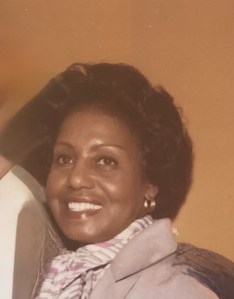
Carrie started working for the City of Los Angeles in 1946 with LAPD. She was a young Black woman walking into a workplace where the doors open to her were few, eighty one years after the Union Army rode into Galveston and read General Order Number 3 aloud, the order Juneteenth marks. Freedom on paper and freedom in practice are not the same thing, and the distance between them is measured in stories like Carrie’s. She walked through a door that was rarely open to someone who looked like her.

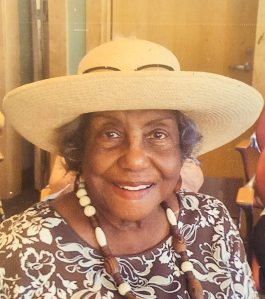
Carrie, photographed not long after she joined the City of Los Angeles’ workforce in 1946. She would serve 32 years, retiring in 1978 as a senior data processing technician with LAPD.

Once she was through that door, she stayed thirty two years. She built a reputation as someone sharp, dependable, ahead of her time, eventually rising to senior data processing technician, helping lay groundwork for systems the City still leans on today. She retired in 1978 and did not slow down for a second. Private industry. Volunteering. Senior centers. Family. Friends she called just to hear their voice.

Carrie remained active for decades after retirement, staying close to family, friends and her community well into her second century of life.

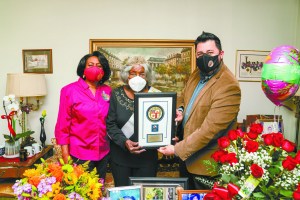
I met Carrie four years ago, days before her 100th birthday, both of us in masks, the pandemic still very much present in every room we walked into. I expected to meet someone frail. Instead I met a woman with no walker, no glasses, cooking her own meals, ready to debate politics with me if I gave her the opening. I did not give her the opening. I just listened. I learned more Los Angeles history in that one conversation than I had in years of living here.

Robert Larios visits Carrie ahead of her 100th birthday, both still masked as the pandemic lingered in every room they walked into. Four years later, he would ask her for a different kind of gift.

After the visit, Carrie started writing to me. Handwritten letters. Cards for no occasion at all, just because she was thinking of someone. I wrote back. A correspondence grew between a CEO and a centenarian who owed me nothing and chose to stay in touch anyway. That tells you everything about who she was.

There was something unmistakably spiritual about Carrie. Quiet, not performed. The kind of faith that fills a room without announcing itself. So one day, thinking of Mister Rogers, I asked her directly.

Pray for me, Carrie.

–Robert Larios

She laughed. She told me she already had been.

Of course she had.

Carrie turned 104 this past January.

Robert Larios visits Carrie ahead of her 100th birthday, both still masked as the pandemic lingered in every room they walked into. Four years later, he would ask her for a different kind of gift.

She passed away on March 31, following a fall. The City she served for 32 years lost a daughter. I lost a friend, and a correspondent, and a woman I had quietly been counting on to keep me in her prayers.

I keep coming back to the timing of all this. Juneteenth is a day about a gap, the gap between when freedom was declared and when it actually reached the people it was meant for. Carrie lived her whole life inside that gap and the long, slow closing of it. She did not wait for every door to open before she walked through the ones that did. She built a 32 year career, a full retirement, a circle of people she loved and stayed in touch with, and a faith strong enough that a CEO half her age would ask her to pray for him and mean it completely.

I do not think that arrangement ends just because she is no longer here to write the letters. I think a person who lived 104 years the way Carrie did, with that much faith, that much grace, that much fight, only gets a clearer line to Heaven once she arrives.

She did not wait for every door to open before she walked through the ones that did.

Thank you, Mister Rogers, for teaching me to ask. Thank you, Carrie, for saying yes.

Today is Juneteenth. I am still counting on her.

← Back

Thank you for your response. ✨

Robert Larios – CEO Bio

Borders crossed. Dreams built.

At one year old, my parents carried me across the Mexican American border with nothing but hope and the clothes on their backs. That leap of faith became my foundation and my fuel.

I grew up the son of farmworkers on an avocado and citrus farm in Southern California, a Mexican immigrant and first generation American learning to navigate two worlds at once. The rows of trees became my first classroom in discipline, resilience and responsibility. Every early morning and every long day in the fields taught me that nothing extraordinary is built without sacrifice.

Today, I am an American CEO. The distance between those two realities, from being carried across a border to leading complex organizations, is measured in grit, education and belief that struggle can become strength.


From farm fields to the CEO seat

I serve as President and CEO of the Los Angeles City Employees Association, LACEA, and its for profit subsidiary, LACEA Insurance Services, Inc., doing business as the Employees Club of California.

LACEA is a nonprofit, mission driven membership association serving 50,000 public employees across California. For nearly a century it has stood beside the people who keep our cities running, the workers who maintain streets, protect neighborhoods, deliver essential services and quietly hold our communities together.

LACEA Insurance Services, Inc., the Employees Club of California, is the association’s for profit arm and official insurance brokerage. Through this platform we partner with Aflac, a Fortune 200 company, to design and deliver supplemental benefits and coverage that protect public servants and their families when life happens.

Only three CEOs have led LACEA in its 98 year history. I am honored to be one of them and to lead both a nonprofit and a for profit subsidiary at the same time. That dual role is rare. Doing it for nearly three decades with a 60 million dollar operating budget and 2 billion dollars in benefits coverage is rarer still.


Impact by the numbers

Numbers never tell the whole story, but they do reveal the scale of a mission.

  • 50,000 members served
  • 2 billion dollars in coverage managed
  • 60 million dollar operating budget led
  • 28 years serving the same family of organizations
  • Two entities with one unified mission

Behind every one of those numbers is a person, a city worker, a county employee, a state professional and the loved ones who rely on them. My job is to make sure they are seen, celebrated and protected.


What I bring to the work

I do not just bring a résumé to the table. I bring my whole life.

I bring the struggle of a family that risked everything crossing a border. I bring the grit forged in the fields of Pauma Valley. I bring the education earned at world class universities. I bring the heart of someone who knows what it means to feel invisible and who has devoted his career to making sure others are not.

That lived experience shapes how I lead and what I offer:

  • Dual nonprofit and for profit CEO leadership
  • Association management and membership growth
  • Insurance brokerage and Fortune 200 partnership management
  • Deep expertise in public sector and government employee benefits
  • Employee benefits administration and risk management
  • Fiduciary governance and board level stewardship
  • An emotionally intelligent, people first strategic vision

In every room I enter, whether a boardroom, city hall, conference stage or classroom, I aim to connect mission, metrics and humanity. Strategy matters. So does soul.


Beyond the corner office

Leadership for me does not end at the office door.

I stay close to the next generation of leaders and to the institutions that shaped me:

  • Panel Moderator, Michigan Ross LA Campus, 2026
  • Mentor, Latinx MBA Mentorship Program
  • Mentor, Michigan Ross Alumni in Residence Program
  • Recipient, Michigan Ross G.O.L.D. Alumni Award, 2024

I also remain rooted in the land that raised me as an avocado farmer in Pauma Valley, California. The soil, the trees and the seasons keep me grounded and remind me where it all started.

Faith and family are my compass. Everything else follows.


Education and the power of opportunity

Education transformed the trajectory of my life.

I earned my B.A. in Spanish Literature and Linguistics, with a minor in Business Administration, from the University of Southern California. Years later I completed my Executive M.B.A. at the University of Michigan Ross School of Business, an experience that sharpened my strategic lens and expanded my global perspective.

Those classrooms were far from the border crossing my parents made with me in their arms, yet every step in between is connected. That is why I care deeply about mentorship, representation and opening doors for others who come from humble beginnings.


A CEO for mission, metrics and meaning

If you lead an Inc. 5000 company, association or nonprofit, you know that today’s world demands a different kind of leadership. You need someone who can navigate board governance and bottom line performance while still keeping people at the center.

That is where I do my best work.

I understand nonprofit governance and for profit execution. I know how to align mission with financial discipline. I lead with a balance of strategy and heart that comes from living on both sides of opportunity, before and after the door opens.

If your organization needs a CEO, advisor or speaker who can bridge those worlds, who can speak to immigrants and executives, frontline workers and board members, public servants and founders, I am a conversation worth having.


Proud roots, bold future

If my journey resonates with you, I invite you to connect, collaborate or bring this message to your organization or stage so that together we can honor the people who serve and build a future worthy of their work.

My story is rooted in two countries and two cultures.

Proud roots: México and the United States.
Calling: to help others turn struggle into an extraordinary life.

They Died for Someone They Didn’t Know. That Someone was Me. And for Many of You.

I think about this more than I probably should. Some debts are like that. They don’t let you look away.

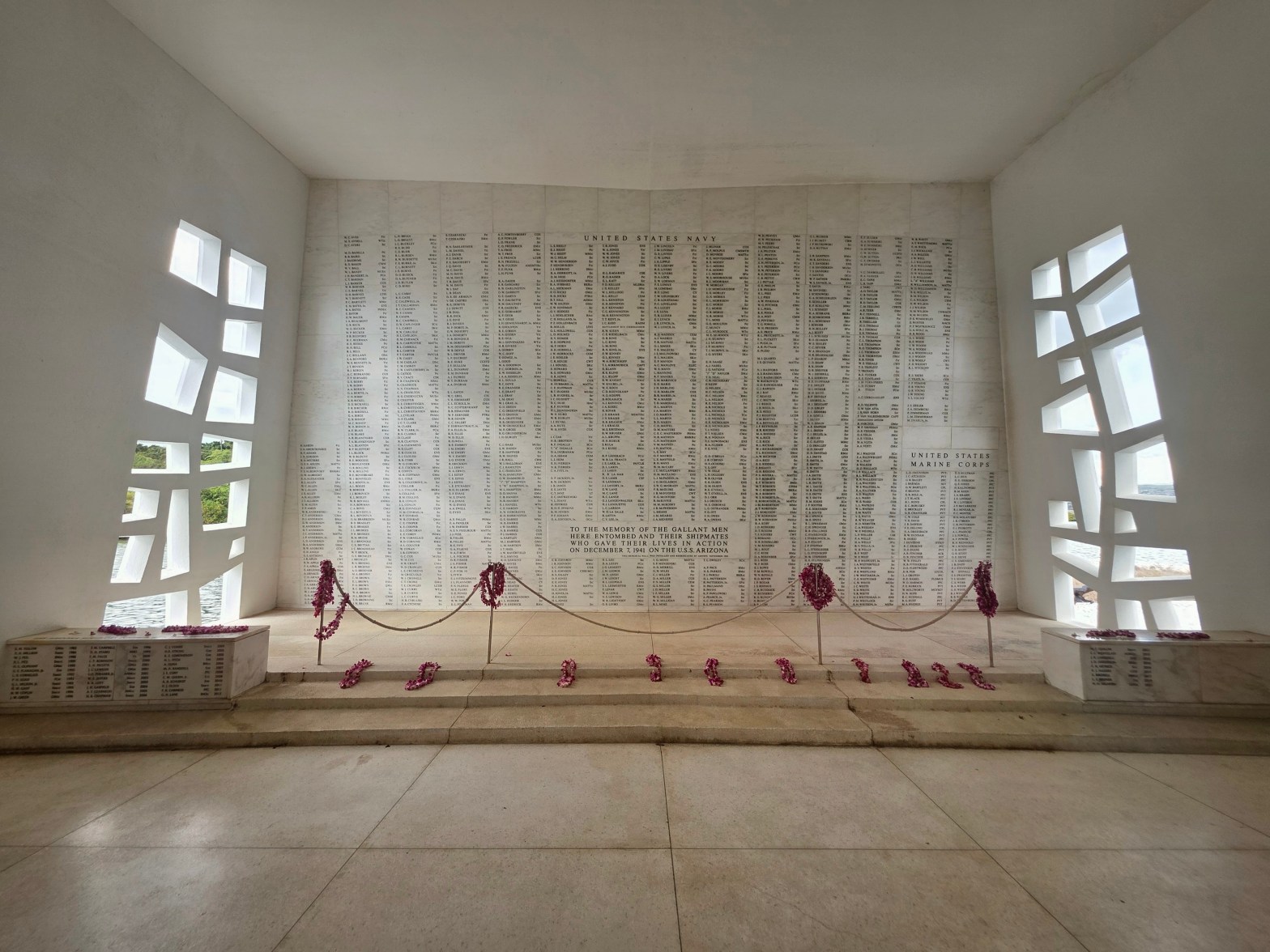
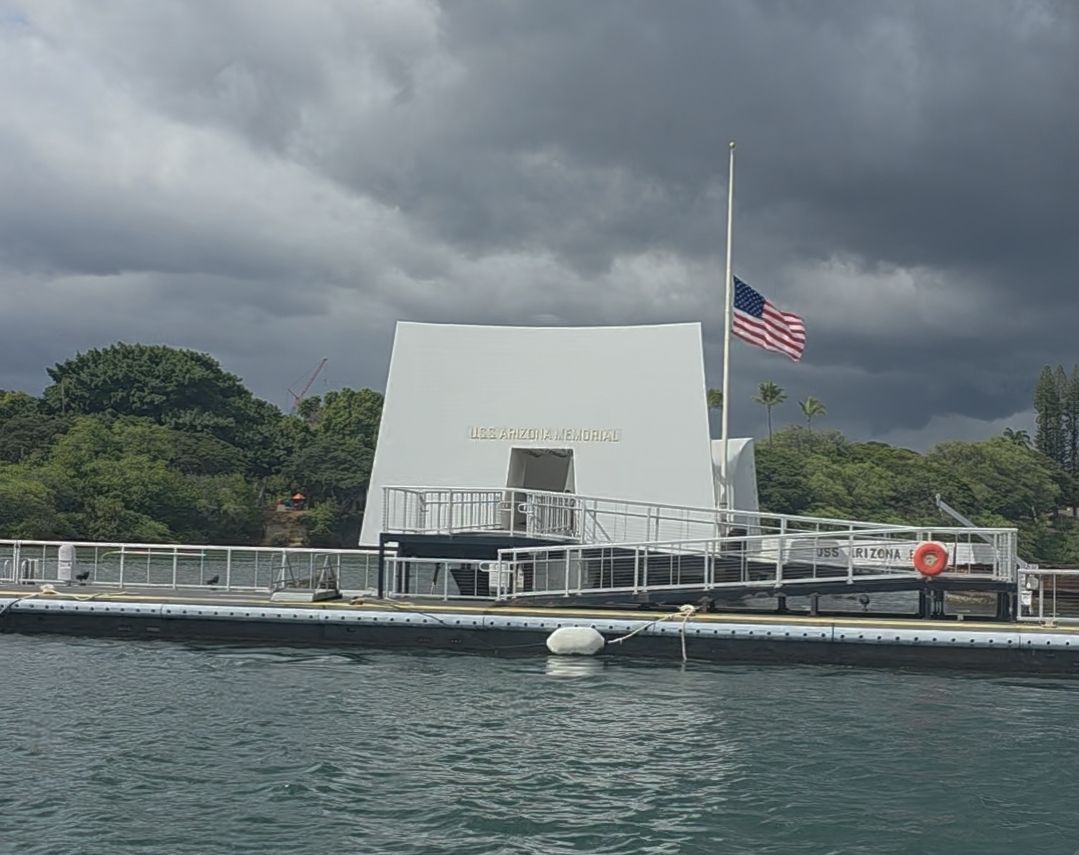
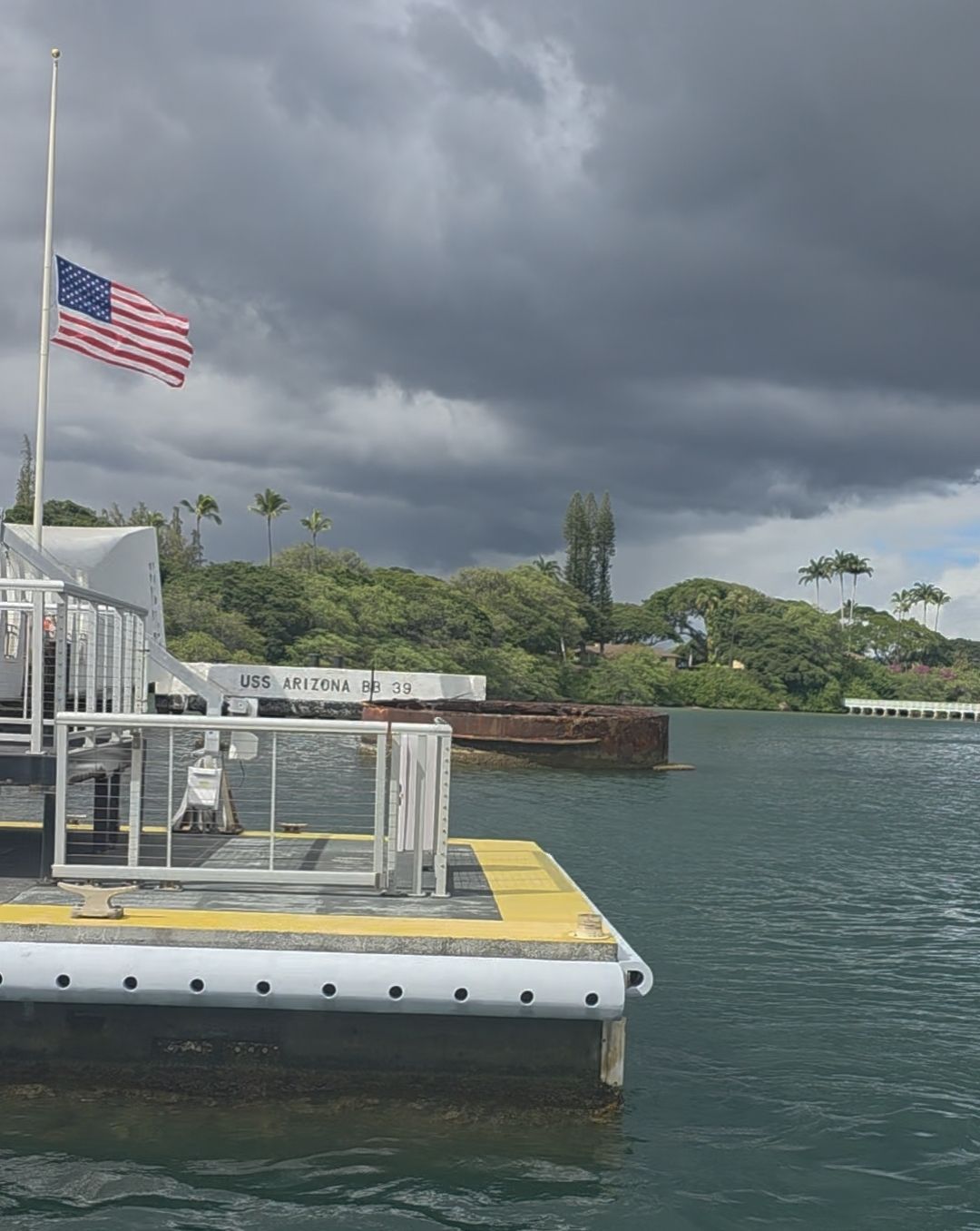
I started writing this from Pearl Harbor, or more accurately, I’m writing this after Pearl Harbor. Because standing inside that memorial, looking at that wall, I couldn’t have written anything. I couldn’t speak. I could barely breathe.

I’ve been to a lot of meaningful places in my life. Nothing prepared me for this. It wasn’t tourism. It wasn’t sightseeing. It was something closer to entering a cathedral that sits on top of a grave. The water beneath the memorial is still. The hull of the USS Arizona is still visible just below the surface. Oil still seeps from that ship more than eighty years later. They call it “the tears of the Arizona.” I don’t have a better word for what I felt standing there than holy.

What hit me all at once… the grief, the gratitude, the weight of names I didn’t know… was not one emotion. It was all of them at the same time. Standing in that shrine room, looking at hundreds of names carved in marble, I thought about what it means to be an American who was not born here. To have been carried across a border at eighteen months old and given a life in a country that boys from Iowa and Georgia and the Bronx died to defend.

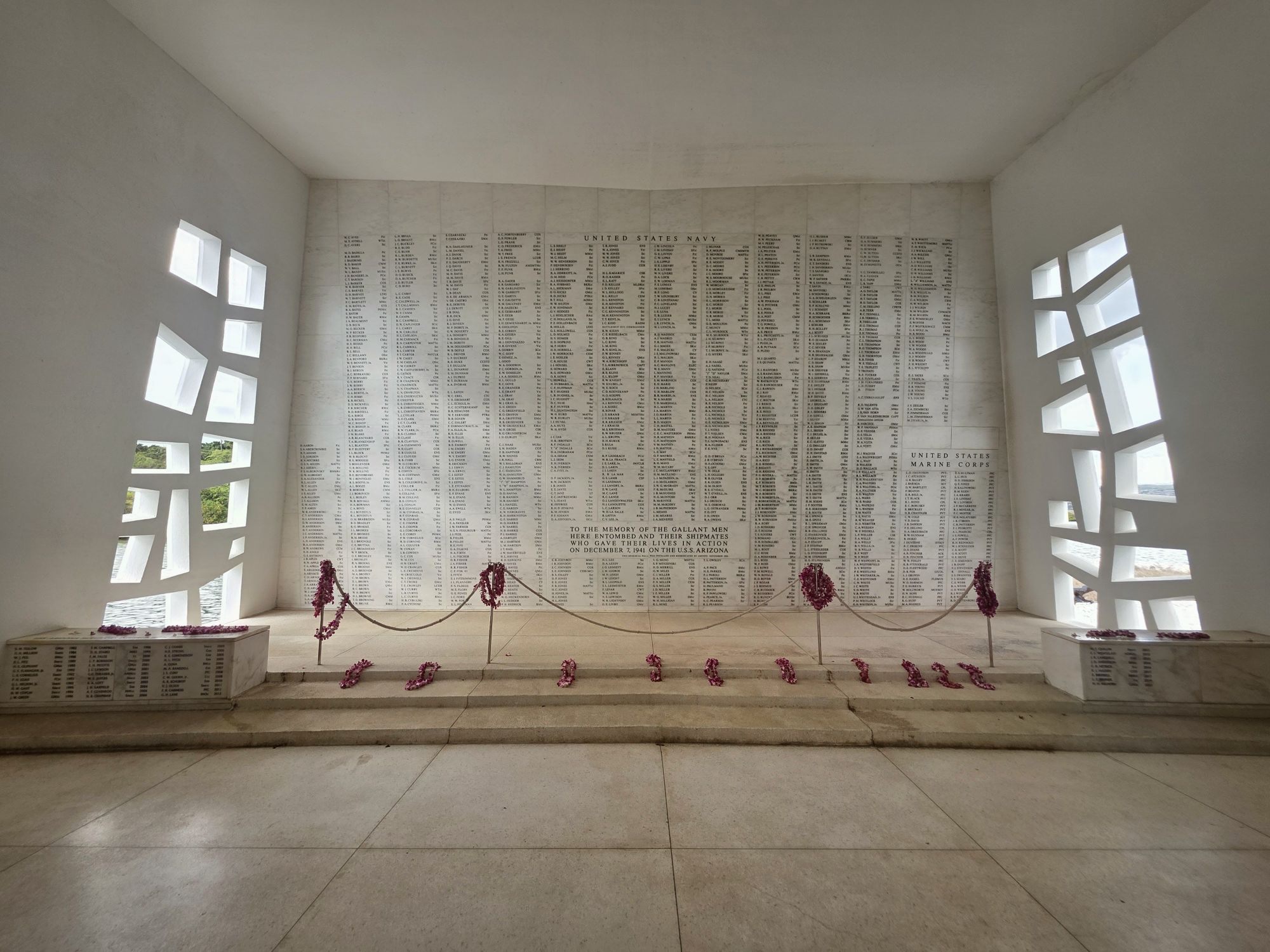
(The photos I’m sharing here are from that visit. I took them myself. I want you to see what I saw.)

Somewhere in Normandy, in the Philippines, in the mudfields of the Argonne Forest, there are white marble headstones that read: “Here rests in honored glory a comrade in arms known but to God.” No name. No rank. No hometown. Just a body, a cross, and an ocean between them and anyone who ever loved them.

But I want to be clear about something. The unknown fallen are not the only ones I carry today.

The known ones pain me just as much.

The ones whose names are on that wall. The ones whose families got a telegram. The ones who were somebody’s husband, somebody’s brother, and whose mothers spent the rest of their lives knowing exactly which patch of foreign soil held what was left of them. I don’t want to move past them in my grief for the unnamed. They gave everything too. They are not footnotes. They are the whole story.

They didn’t know me. They couldn’t have. They died anyway.

All of them… known and unknown… were somebody’s son. Maybe somebody’s father. And they died without ever knowing that a kid named Roberto would be born in Pihuamo, Jalisco, decades later, carried across the U.S.-Mexico border at eighteen months old, and eventually stand in a courtroom with his hand raised, swearing an oath to the same country they bled for.

They didn’t know me. They couldn’t have.

They died anyway.

I’ve spent a lot of my life thinking about the people who did know me. My parents, Rafael and Carmen, who carried me through that border with nothing but nerve and hope. The Maynards… Verne and Joyce… who gave my father work in the citrus and avocado groves of Pauma Valley and eventually sponsored our family through the 1986 amnesty. What I don’t say often enough: Verne was a World War II veteran. Purple Heart. He already knew what this country cost before he ever helped make room in it for us. Bud Bradford. Sherman Johnson. These are the faces of my American story. I know their names. I’ve shaken their hands.

Some of them are gone now. I can’t thank them in person anymore. That door closed.

But John Hawkins is still here, and I want to say something about him that I don’t think I’ve said loudly enough.

John hired me in 1998 to work at the Los Angeles City Employees Association… a young member services counselor, the son of a farmworker, still figuring out what he was capable of as a recent USC graduate. What I didn’t fully appreciate then was that John had walked those same grounds before me. He graduated from USC in 1993. He already knew what that degree could mean for someone who had to earn it. He spent the better part of the next two decades investing in me, shaping me, and ultimately handing me the keys to an organization he’d spent his career building. What most people don’t know is that before John Hawkins ever believed in me, he served.

Four years on a nuclear fast-attack submarine. USS Salt Lake City, SSN 716. Newport News. San Diego. He earned the Navy Achievement Medal from the Secretary of the Navy, the Good Conduct Medal, the Meritorious Unit Commendation and Expeditionary Medal. Life member of the Veterans of Foreign Wars.

The man who opened the biggest professional door of my life had already spent four years underwater, in the dark, in service to the same country I was still trying to become a legal part of.
I don’t think that’s a coincidence. I think that’s character. And I think character compounds.

There are more than 218,000 American war dead buried in overseas cemeteries managed by the American Battle Monuments Commission. Twenty-six cemeteries across sixteen countries. Thousands of those graves still don’t have a name on them. The ABMC buries them all the same way… no regard for rank, race, or creed. Equal in death in a way America didn’t always manage in life.

That last part matters. Because some of those unknown soldiers were Black men who fought in a segregated military. Hispanic men. Native Americans. Men who couldn’t always drink from the same fountain as the officers commanding them… but who died in the same mud, and now rest under the same marble.

They weren’t fighting for a perfect country. They were fighting for the idea that it could become one.

They weren’t fighting for a perfect country. They were fighting for the idea that it could become one.


The Defense POW/MIA Accounting Agency is still out there, right now, doing forensic DNA work to put names back on those headstones. Slowly replacing “Unknown” with someone’s actual name. It takes years. They keep going anyway. Because the belief is that nobody who died for this country should stay nameless forever.

I find that almost unbearably moving.

What it says is: we haven’t forgotten you, even when we can’t yet find you. That’s not bureaucracy. That’s a kind of love.

I stood at the USS Arizona Memorial. The flag was at half-staff. The harbor was quiet. Hawaiian leis had been laid along the base of the wall of names inside the shrine room… crimson against white marble. Someone placed them there because they still needed to. Because that’s what grief does when it has nowhere else to go. It finds an offering.

Today is a day of remembrance, gratitude, and grief. I felt all three last November at Pearl Harbor. And I feel all three again today.

I am the son of immigrants. I became an American citizen in a courtroom, not a hospital. The men and women remembered today… by name, without name, beneath land and sea… made room for that story before I ever existed to live it.

I don’t take that lightly.

I don’t take any of this lightly.

Today is a day of remembrance, gratitude, and grief. I felt all three last November at Pearl Harbor. And I feel all three again today.

The President Who Gave My Family a Chance: Ronald Reagan, Immigration, and the American Dream

A President’s Day Reflection

Today is President’s Day, and while most people are enjoying a three-day weekend, I’m thinking about a president who changed my life forever. Not through a tweet, a press conference, or a political slogan. But through an act of moral courage that gave millions of people—including me and my parents—the chance to step out of the shadows and become legal permanent residents of the United States.

On November 6, 1986, President Ronald Reagan signed the Immigration Reform and Control Act into law. Nearly three million people would eventually gain legal status through what Reagan himself called “amnesty.” My parents and I were three of them. We became permanent residents. Years later, in the early 2000s, I became a U.S. citizen.

The Journey to Pauma Valley

In 1976, my parents made a decision that would define all of our lives. They crossed into the United States with me, leaving everything behind in Mexico with nothing but the clothes on our backs and a dream that felt both impossible and necessary.

We settled in Pauma Valley, a small agricultural community in San Diego County tucked into the foothills of the Palomar Mountains. If you’ve never been there, picture rolling hills covered in citrus groves and avocado orchards, the kind of place where the air smells like orange blossoms in spring and where hard work was the only currency that mattered.

My parents didn’t speak English. We had no documentation, no safety net, no connections except for his kind employer, Verne and Joyce Maynard. What they had was a willingness to work harder than most people can imagine and a faith that America might actually be the place where effort and integrity still mattered.

My father found work doing what so many Mexican immigrants did in Pauma Valley—working the citrus and avocado groves owned by the Maynards. I can still picture him coming home after a full day’s work, his hands rough and stained, his back aching from bending over trees under that relentless California sun. He’d shower, eat whatever my mother had prepared, and collapse into sleep, only to wake up before dawn and do it all over again.

My mother found work as a housekeeper at the Pauma Valley Country Club. She cleaned rooms and made beds for members who drove luxury cars and played golf on manicured greens while she scrubbed their toilets and changed their sheets. They never knew her name. They never knew her story. They never knew that the woman making their beds left behind her entire family to give her son a chance at something better.

We lived with constant fear. Every knock on the door could be immigration. Every police car on the road could mean the end of everything. We were contributing—my parents paid sales taxes, bought groceries from local stores, attended church, were good neighbors. But legally, we didn’t exist.

I grew up undocumented. Think about what that means for a kid. I couldn’t tell anyone my real story. I couldn’t participate in things other kids did. I lived with this secret that made me feel invisible and hyper-visible at the same time. My parents were working themselves to exhaustion for me and eventually my three younger sisters, but I couldn’t even dream properly because there was no legal path forward.

A Conservative President’s Radical Compassion

Here’s what most people don’t remember about Ronald Reagan: he believed in amnesty.

Not as a political calculation. Not as a way to win votes. But because he fundamentally believed in human dignity and the American promise.

In a 1984 debate with Walter Mondale, Reagan said something that would be almost unthinkable for a Republican presidential candidate to say today: “I believe in the idea of amnesty for those who have put down roots and lived here, even though sometime back they may have entered illegally.”

Think about that. The father of modern American conservatism, the man who challenged the Soviet Union to tear down walls, who believed in limited government and traditional values, looked at millions of undocumented people and saw not criminals or invaders, but human beings who deserved a chance.

Reagan’s own diaries reveal he was uncomfortable with the idea of a militarized border. In a meeting with Mexico’s president, he expressed hope that the U.S.-Mexico border could be “something other than the location for a fence.” His former speechwriter Peter Robinson noted that Reagan believed America was “fundamentally open to those who wanted to join us here.”

Senator Alan Simpson, one of the Republican authors of the 1986 law, recalled that Reagan was deeply concerned about the exploitation of undocumented people who had no legal protections: “Anybody who’s here illegally is going to be abused in some way, either financially or physically. They have no rights.”

This wasn’t just policy to Reagan. It was personal. He was a Californian. He saw Mexican immigrants working in fields, in kitchens, in construction. He saw their humanity.

November 6, 1986: The Day Everything Changed

When Reagan signed the Immigration Reform and Control Act, our lives transformed overnight.

I remember my parents talking about it in hushed, hopeful tones. I remember the paperwork spread across our kitchen table. I remember my mother crying—not from sadness, but from relief so profound it had nowhere else to go.

Suddenly, we could exist. My father could work without fear. My mother could drive without panic. I could dream about going to college without that voice in my head saying, “But you can’t because you’re not really here.”

We paid $185 per person, which was a fortune for a farmworker and a housekeeper in the 1980s. My parents had to demonstrate “good moral character.” They had to learn English. They had to prove we’d been in the country since before January 1, 1982. The Maynard family, owners of agricultural ranch land and Republicans, also sponsored and supported us.

They did it all. We did it all. Not because it was easy, but because it was finally possible. For the first time in a decade, their hard work and their integrity actually meant something in the eyes of the law.

Reagan said the law would enable unauthorized immigrants to “step into the sunlight.” That’s exactly what it did for us. We stepped into the sunlight together. We became legal permanent residents—green card holders with a path forward.

Years later, in the early 2000s, I took the oath and became an American citizen. I still remember the ceremony. I still remember feeling like I could finally breathe all the way in.

What This Means for Me

I am the direct product of Ronald Reagan’s moral courage.

Every opportunity I’ve had—my education, my career, my ability to serve the public employees of California as CEO of their association—exists because a Republican president had the guts to look at a farmworker, a housekeeper, and their kid and say, “You deserve a chance.”

I think about my father coming home from those citrus groves, exhausted and aching, but never complaining. I think about my mother scrubbing other people’s floors while raising me to believe I could be anything. I think about being a kid who couldn’t tell the truth about who he was.

And I think about the president who looked at families like mine and said, in effect, “You’ve worked hard. You’ve played by the rules as best you could. You’ve become part of the fabric of American life. You deserve legal status and a path to citizenship.”

That’s not politics. That’s humanity.

Without Reagan’s 1986 amnesty giving us permanent residency, I don’t get to go to college. I don’t get to eventually become a U.S. citizen. I don’t get my MBA. I don’t get to serve 50,000 public employees and their families. I probably don’t get to write this blog post on President’s Day as a proud American.

That’s leadership. That’s compassion. That’s conservatism at its best—recognizing that human dignity matters more than political convenience.

The Road Not Taken

Here’s what breaks my heart: the Immigration Reform and Control Act of 1986 was supposed to be comprehensive immigration reform. It had employer sanctions to discourage illegal hiring. It had amnesty for those already here. It was meant to be a complete solution.

But the enforcement mechanisms were never properly implemented. The sanctions on employers were toothless. The border security improvements were inadequate. And because of those failures, the undocumented population grew from a few million in the late 1970s and early 1980s to roughly eleven million today.

Some people point to this as proof that amnesty doesn’t work. I’d argue the opposite. The amnesty worked beautifully—2.7 million people got legal status, became productive members of society, and many eventually became citizens. What failed was our unwillingness to create a functional legal immigration system that matched economic reality.

Reagan would have been furious at our failure to fix the border and create workable immigration channels. But I also believe he would have been just as furious at the dehumanizing rhetoric we now use to talk about immigrants, the family separations, the cruelty disguised as law enforcement.

President’s Day 2026: What We’ve Lost

As I write this on President’s Day 2026, I can’t help but feel we’ve lost something essential about what it means to be conservative, to be compassionate, to be American.

Ronald Reagan understood something that too many politicians have forgotten: America’s strength comes not from walls and enforcement alone, but from our ability to integrate newcomers into the American story. Our economy needs immigrant labor. Our communities are enriched by immigrant cultures. Our values are strengthened when we live up to our promises.

Reagan wasn’t naive. He wanted border security. He wanted employer accountability. He wanted legal immigration pathways. But he also wanted to acknowledge reality and treat people with dignity.

A Personal Thank You

Mr. President, if you could somehow hear this across the years:

Thank you for seeing my father as more than cheap labor in the groves. Thank you for seeing my mother as more than the invisible woman cleaning rooms at the country club. Thank you for seeing me as a kid who deserved a future.

Thank you for having the courage to sign a law that your own party now pretends never happened. Thank you for believing that America could be both a nation of laws and a nation of compassion.

Because of you, my father worked those same groves for another thirty years, but he did it legally and with dignity. Because of you, my parents became farm owners, like the Maynards, contributing to the economic strength of agriculture for the benefit of American society. Because of you, I was able to go to college, earn an MBA, and build a career serving working people.

You gave my family a chance. And I promise you, Mr. President, we didn’t waste it.

My father worked until his body couldn’t anymore; he is now retired. My mother instilled in me a work ethic and sense of dignity that guides everything I do. And I’ve spent my entire career fighting for public employees—the people who make our cities, counties and states work, who often feel invisible just like my parents did.

We became the Americans you believed we could be.

For Others Walking the Same Path

If you’re reading this and your family has a similar story, I see you.

I know what it’s like to watch your parents work themselves to exhaustion for wages that would make most Americans walk off the job. I know what it’s like to be afraid of police cars and government offices. I know what it’s like to feel invisible and exposed at the same time.

Your story matters. Your parents’ sacrifice matters. The courage it took to leave everything behind and start over in a country that didn’t always welcome you—that matters tremendously.

And if you’re reading this and you don’t understand why anyone would risk everything to come here without documentation, let me ask you something: What would have to be true in your life for you to take that risk? What kind of poverty would make a dangerous border crossing seem like the safer option? What kind of violence would make you leave your home, your language, your culture, everyone you’ve ever known?

My parents didn’t leave Mexico because they were adventurous or reckless. They left because staying meant accepting that I would grow up with no horizon, no possibilities, no way out. They came here not to take advantage of America, but to contribute to it—and they did, for decades, even when the law said they shouldn’t exist.

I’m writing this because I want you to know: if you grew up like I did, if your parents worked like mine did, if you lived with that same fear—your story is American too. You belong here. Your family’s sacrifice built this country just as surely as anyone else’s.

The Legacy We Choose

Ronald Reagan showed us that immigration reform doesn’t have to be a zero-sum game. You can have border security and human dignity. You can have legal accountability and compassion. You can honor the law and acknowledge that sometimes the law needs to catch up with reality.

The 1986 Immigration Reform and Control Act wasn’t perfect. But it was built on a foundation that we’ve abandoned: the belief that people who are here, who are working, who are part of our communities, who are contributing to American life—those people deserve a pathway to legal status.

That’s not radical. That’s not socialist. That’s conservative in the best sense of the word—conserving human dignity, conserving family unity, conserving the American promise that hard work and integrity still matter.

On this President’s Day, I’m grateful for a president who had the courage to act on his values instead of just talk about them. A president who looked at millions of undocumented immigrants and saw not a problem to be solved, but human beings deserving of a chance.

That president changed my family’s life.

And for that, I will be forever grateful.

Sources

For readers who want to dig deeper into the history and policy behind my story, here are some of the materials I relied on:

  • “Immigration Reform and Control Act of 1986” – overview of the law, legalization programs, employer sanctions, and approximate number of people who obtained legal status (about 2.7–3 million). Wikipedia.
  • “Immigration Reform and Control Act of 1986” – Library of Congress Latinx civil rights guide, detailing the law’s impact on Latinx communities and its historical context.
  • “IRCA in Retrospect: Guideposts for Today’s Immigration Reform” – Migration Policy Institute, analyzing what worked (legalization) and what failed (enforcement, employer sanctions) in the 1986 reform.
  • “Lesson 2: The Immigration Reform and Control Act and its Aftermath” – Justice for Immigrants, explaining how IRCA combined amnesty, employer sanctions, and border enforcement and why it fell short of comprehensive reform.
  • “The Causes and Consequences of the 1986 Immigration Reform and Control Act (IRCA)” – F. D. Bean et al., academic working paper examining the law’s design, implementation, and long-term demographic effects.
  • “The Impact of IRCA on the Job Opportunities and Earnings of Mexican-Origin Immigrants” – research on how legalization affected work and wages among Mexican-origin immigrants.
  • “Effects of Immigrant Legalization on Crime: The 1986 Immigration Reform and Control Act” – study of how legalization influenced broader integration outcomes.
  • “Historical Overview of Immigration Policy” – Center for Immigration Studies, placing IRCA in the larger history of U.S. immigration policy and undocumented population trends.

Robert Larios is President & CEO of the Los Angeles City Employees Association (LACEA) and the Employees Club of California, serving over 50,000 public employees. He came to the United States from Mexico with his parents in 1976 and became a legal permanent resident through the 1986 Immigration Reform and Control Act signed by President Ronald Reagan. He became a U.S. citizen in the early 2000s. He is the proud son of a citrus and avocado farmworker and a housekeeper who became farm owners and taught him that dignity and hard work matter more than status.

From Pauma Valley to Dodger Stadium: A Personal Journey Through Fernandomania

In the vibrant tapestry of baseball’s history, few threads shine as brightly for me as that of Fernando Valenzuela. I remember vividly the phenomenon known as “Fernandomania” that began in 1981—a time when Los Angeles and its diverse communities fell under the spell of a young pitcher whose brilliance transcended the sport.

As a young Mexican immigrant, adapting to life in America brought its own set of challenges. But amidst those challenges, there was Fernando, a beacon of hope and representation. Watching him pitch wasn’t just about the game; it was about seeing someone who looked like me achieve the unimaginable. His success was a powerful symbol of possibility and perseverance, igniting a spark within me that would carry me far beyond the baseball diamond.

Growing up in San Diego County, the land of the Padres, my allegiance to the Dodgers was an anomaly. Most of my peers wore brown and gold, cheering for the local team. Yet, my heart was captured by the blue and white of the Dodgers, drawn by the magnetic pull of Fernandomania. It wasn’t just Fernando’s talent on the mound that influenced me; it was the sense of cultural pride and community he embodied. In him, I saw a reflection of my own journey and the hopes of countless others like me.

In the early 1980s, Pauma Valley was a place where the scent of ripe citrus mingled with the earthy aroma of freshly tilled soil. The days were often filled with the rustle of leaves dancing in the gentle breeze, and the air was punctuated by the distant hum of tractors working the fields. Our family lived with distant neighbors, and the only children playing were my siblings and me. This isolation only strengthened our bonds, making family moments even more precious.

Life here was simple yet vibrant. The mornings ushered in the soft glow of sunlight filtering through the trees, casting long shadows across the valley. My siblings and I made our own fun along the dirt paths, our laughter mingling with the melodic calls of birds. In the evenings, the smell of fresh tortillas and simmering beans wafted through the air, drawing our family together around the dinner table.

I recall the ritual of adjusting the antenna on our roof to catch the Dodgers games—an effort as much about devotion as it was about determination. The antenna, a spindly contraption of metal rods, stood precariously atop our roof. Climbing up there required balancing on the creaky ladder, the chill of the evening air nipping at my cheeks as I reached the summit.

With each careful twist and turn of the antenna, I strained to hear the faint crackle of the broadcast, a ghostly whisper amidst the static. The metal creaked in response to my adjustments, a symphony of clanks and groans that accompanied my quest for a clearer view of Fernando on the mound. The anticipation was palpable; every slight improvement in the signal was greeted with cheers from below, my siblings and parents eagerly waiting for that rare, clear glimpse of the game.

The picture was never perfect—often a flickering collage of blurred figures and snowy interference—but it was enough. Enough to transport me to Dodger Stadium, to the heart of the action, where Fernando’s magic unfolded pitch by pitch. Each successful connection was a triumph, a tangible link to a larger world beyond our quiet valley, binding us to the collective excitement of Fernandomania.

Watching him pitch wasn’t just about the game; it was about seeing someone who looked like me achieve the unimaginable

Fast forward to my late 30s, when life had painted my journey with broader strokes of experience and maturity. I found myself at the Brookside Golf Course in Pasadena, a place alive with the vibrant energy of a sunlit afternoon. The sky was a brilliant canvas of blue, and the aroma of fresh pastries from a nearby café mingled with the floral scents of blooming jacaranda trees. As I navigated the manicured greens, a familiar figure caught my eye.

There was Fernando, effortlessly blending into the crowd yet unmistakable to those who knew his legacy. My heart raced with a mix of excitement and disbelief as I approached him, feeling the weight of years of admiration. As I walked up, he turned and met my gaze, offering a warm, inviting smile.

“Hola, Fernando,” I greeted, my voice carrying both awe and a deep sense of respect. “Meeting you is a dream come true. Your games were a lifeline for my family and me back in Pauma Valley.”

Él soltó una risa cálida, que me tranquilizó al instante. “Gracias,” respondió, su voz tan auténtica como su sonrisa. “Siempre es un placer conocer a los fans que han sido parte de este viaje.”

We spoke briefly, exchanging stories—mine of antenna struggles and family gatherings around the TV, his of the early days in Los Angeles and the whirlwind of Fernandomania. He listened intently, nodding as if each word was a thread weaving us closer.

In those few moments, amidst the peaceful surroundings of Brookside, I felt an indescribable connection—not just to Fernando, but to the countless memories his career had colored in my life. Meeting him in person solidified the bond I had long felt with the Dodgers and the community that rallied behind him.

As we parted ways, he offered a parting piece of advice: “Sigue creyendo en tus sueños, así como yo lo hice. Nunca sabes a dónde te llevarán.”

That encounter became a cherished memory, a personal touchstone that reinforced my identity, my connection to the community, and my unwavering commitment to the team that had captured my heart.

Beyond this moment, the excitement of opening day at Dodger Stadium still lingers vividly in my mind. The electric buzz of anticipation filled the air as fans donned their jerseys, the stadium a sea of blue and white. The crack of the bat, the roar of the crowd, and the smell of freshly grilled Dodger Dogs created an unforgettable symphony of senses that marked the start of a new season—a fresh chapter in the ongoing story of my love for the Dodgers.

Equally unforgettable was game 2 of the 2017 World Series against the Houston Astros. The energy in the stadium was palpable, each pitch a heartbeat in a thrilling narrative of competition. The air was thick with tension and hope, every swing and miss echoing through the stands as we cheered for our team with fervor. But perhaps the most enduring moment was witnessing Vin Scully and Fernando Valenzuela team up for the ceremonial first pitch. The legendary voice of Scully resonated through the stadium, narrating the moment with grace, as Fernando prepared to throw the ball. It was a poignant convergence of past glory and present pride, a tribute to the legacy that these two icons had built together.

Fernando was more than just a pitcher; he was our cultural icon. Los Angeles, a mosaic of languages and cultures, found a common hero in him. Valenzuela’s prowess on the mound united fans from every background, and his rise to stardom was particularly meaningful for the Mexican-American community, for whom he became a symbol of pride and belonging in a sport that often felt exclusive.

As the season unfolded, Valenzuela’s achievements—a string of wins, shutouts, and eventually, the Cy Young and Rookie of the Year awards—crafted a narrative of triumph and inspiration. His role in the Dodgers’ World Series victory was legendary, forever binding his legacy to the city’s heart. For fans like me, watching the team lift the championship trophy was a shared dream, a moment that solidified our allegiances and created memories that would last a lifetime.

Even as we faced the sorrowful news of Fernando Valenzuela’s passing just days before another World Series victory in 2024, his legacy remained unblemished. His story is a testament to the enduring power of Fernandomania—a force that transcends generations, reminding us of the unity and joy that sports can bring.

For me, the impact of Valenzuela’s journey was profound. It fueled my own ambitions, encouraging me to pursue success with the same determination and resilience. As I climbed the ranks to become a CEO, the lessons I learned from watching Fernando play—grit, humility, and the courage to defy expectations—remained central to my ethos. Valenzuela’s legacy was a constant reminder that talent knows no borders and that the impact of a single player can unite cities, communities, and generations in a shared love for the game.

Valenzuela paved the way for future generations of Latino players, inspiring countless young athletes, including myself, to chase their dreams with passion and dedication. His screwball, once baffling batters, now serves as a metaphor for daring to be different, for pushing boundaries in the pursuit of excellence.

In the end, Fernandomania was not just about baseball—it was a cultural movement, an emblem of hope and inspiration. For me and many like me, Fernando Valenzuela’s legacy instilled pride and belonging, fueling both personal and professional triumphs. His story is a beacon of what’s possible, etched into the very fabric of Los Angeles and celebrated in the cheers that echo through Dodger Stadium and in the hearts of fans worldwide.

Celebrating Hispanic Heritage Month: Traditions, Contributions, and Future Visions

During a recent fireside panel chat, I was asked these questions about Hispanic Heritage Month: What is the cultural relevance of Hispanic Heritage Month to you, and how do you celebrate Hispanic culture during this time? Looking to the future, how would you like to see Hispanic heritage celebrations evolve and recognize the importance of Hispanic contributions? These questions sparked a reflection on its profound cultural relevance and the lively celebrations it inspires. This special time allows me to celebrate Hispanic culture by embracing our community’s rich traditions and stories. Whether through music, cuisine, or storytelling, each celebration brings a strong sense of pride and unity. Looking to the future, I envision the evolution of Hispanic heritage celebrations to more expansively recognize and honor Hispanic contributions, weaving them further into the cultural fabric of society. This growth will ensure that the essence of Hispanic Heritage Month remains vibrant and influential for future generations.

What is the cultural relevance of Hispanic Heritage Month to you, and how do you celebrate Hispanic culture during this time?

Hispanic Heritage Month holds profound significance for me as it embodies the journey of my family and countless others who have contributed to the rich cultural fabric of America. As a Mexican immigrant who has navigated the challenges of integrating into a new society, this month serves as a reminder of the resilience, strength, and vibrant traditions that define the Hispanic community. It’s an opportunity to celebrate the diversity that enriches our nation and to honor the contributions of Hispanic individuals in all walks of life.

In celebrating Hispanic Heritage Month, I engage both personally and professionally. On a personal level, it is a time for family gatherings where we share stories of our heritage, enjoy traditional Mexican dishes, and pass down cultural practices to the younger generation. Professionally, I advocate for educational initiatives and community events that highlight Hispanic achievements and foster understanding and appreciation of our culture. These events serve as a platform to acknowledge the hard work and dedication of Hispanic public service employees and to inspire future generations.

Looking to the future, how would you like to see Hispanic heritage celebrations evolve and recognize the importance of Hispanic contributions?

Looking forward, I envision Hispanic Heritage Month evolving into a more inclusive celebration that emphasizes education and cultural exchange. I would like to see increased integration of Hispanic history and achievements into educational curriculums, ensuring that stories of our community are woven into the narrative of American history. Additionally, I hope for more collaborative events that bring together diverse communities to celebrate Hispanic culture, promoting dialogue and understanding. By doing so, we can build bridges across cultures and create a more inclusive and appreciative society, where the contributions of every community are recognized and celebrated.

Riding Through Time: A 10th Grader’s Journey on Highway 76 in 1990

Back in the spring of 1990, life seemed simpler and more serene. As a 10th grader at Fallbrook Union High School, my daily routine included an hour-long bus ride from Pauma Valley along the tranquil stretch of Highway 76. Each morning, the journey transformed into a personal escape, a time to daydream and reflect without the interruptions of today’s digital world. The landscape outside the bus window unfolded like a peaceful painting, untouched and expansive, inviting a sense of calm and endless possibilities.

Fast forward to the present day, and the scenery has changed dramatically. Highway 76 is now a vibrant scene, bustling with activity, much of which is brought by the prosperous Native American gaming casinos that have emerged over the years. Names like Pechanga, Pala, Pauma, Harrah’s, and Valley View have added a new vibrancy and economic energy to the area. Yet, as the road’s character evolved, I often find myself longing for those quiet rides that offered solace and a chance to dream.

One memorable Saturday morning that spring, I was set to attend my first driver’s education class. The anticipation was palpable, mixed with nerves about the reputation of our instructor, Garland Dunbar, known for his stern demeanor. I owe a note of gratitude to my good friend Brad Thompson, who shared Mr. Dunbar’s name for this reflection. Thankfully, I wasn’t alone in that class; Brad was also attending, and his father, Brad Carlton Thompson, Sr., had kindly offered to drive us.

“Remember, everyone’s a beginner once.”

-Brad Carlton Thompson, Sr.

Mr. Thompson’s calm presence during the drive was a comforting anchor, much like those serene bus rides. He offered us gentle wisdom with a smile: “Remember, everyone’s a beginner once.” His words carried a quiet strength that eased my anxiety, leaving a lasting impression of kindness and support.

I am deeply saddened by the passing of Mr. Thompson and extend my heartfelt condolences to Brad and his entire family. Reflecting on that significant day in 1990, I am struck by the profound influence individuals like Mr. Thompson have on our lives. The values he exemplified—kindness and compassion—are qualities I strive to embody in my own life, inspired by the remarkable examples set by people like him. May his spirit continue to guide and uplift those he touched, and may his enduring influence encourage us all to live with the same grace and empathy.

Oranges, Avocados, and Childhood Memories: A Glimpse into Life in the Mid-1980s

Bathed in the soft light of dawn back in the ’80s, say ’84 or thereabouts, my school day routines were etched into the framework of simpler times. Around 7:15 each morning, I’d step out from the quaint ranch house we called home, my dad toiling away as a hand on the Maynard’s majestic orchards. My trek to Pauma Elementary was nothing short of a visual feast, flanked by a riot of Valencia oranges and the towering might of Fuerte avocados, guardians against the relentless summer blaze.

Most days, this serene walk was shared with a few local kids, like the Chavez brothers, Carlos and Oscar, forming a small band of early risers united by the daily pilgrimage to education. However, one day remains vividly etched in my memory, distinguished by the unexpected companionship of three kids from the neighboring Native American reservation. Jason Gillespie was a striking figure, his fiery red hair and ghostly pale skin contrasting sharply against his all-black attire. Topping off his distinctive look was a Raiders hat, beneath which lay a gaze filled with melancholy, punctuated by a distant, blank stare. Seeing him on the reservation, sticking out so much from everyone else, really sparked my curiosity. It became a puzzle I’d think about a lot during my walks.

On that fateful morning, with the school bus’s arrival looming about 15 minutes away, an impromptu suggestion for an orange-throwing game emerged—an echo of today’s laser tag but infused with the organic thrill of our natural surroundings. We ventured into the forbidden territory of the orange grove, where the air was thick with the scent of ripe citrus. Ignoring the Verne’s silent disapproval, we got lost in the fun of our playful battle.

The game initially seemed balanced, with the Chavez brothers and I on one side, facing Jason and his friends. Laughter and shouts filled the air, mingling with the sweet fragrance of oranges. But as the distant rumble of the school bus grew closer, the game took a turn. The Chavez brothers, sensing the time, abandoned their ammunition and made a beeline for the bus stop. Suddenly, I found myself the sole target of Gillespie and his allies, bombarded with a barrage of oranges. One fruit, in a stroke of impeccable aim or sheer chance, struck me fiercely on the temple, exploding upon impact and drenching me in its zesty essence.

With the sound of the bus nearing, urgency eclipsed my stunned silence. I rushed to clean off the sticky mess from the ambush as I bolted for the bus, the strong smell of oranges reminding me of the morning’s chaos. Feeling both embarrassed and uncomfortable, I went on my way.

Boarding the bus last, I entered a world very different from the playful atmosphere of the orchard. However, the scent of citrus lingered on me like cologne, accompanying me throughout the day. It brought back memories of laughter, friendship, and a fading youth, mixed with feelings of guilt and unease.

Looking back from the perspective of adulthood, it’s deeply moving to see how life has led us all down such different paths. Carlos Chavez’s journey was cut tragically short in 2021, succumbing to the ravages of COVID-19. Jason Gillespie, known for his striking red hair and enigmatic presence, met a tragic and untimely end. His life, a rollercoaster of twists and turns, culminated in a violent altercation, sealing his fate. Fresh out of prison for a crime in Pauma Valley, California, where he took another man’s life, his story closed with an equally tragic chapter. Our childhood games under the California sun, seemingly inconsequential then, now resonate with deeper meanings—reminders of fleeting innocence, the complex tapestry of human lives, and the indelible marks we leave on each other’s souls.

Slice of the 80s: My Unforgettable Encounter with Square Pan Pizza

Picture it, the early 1980s. Let’s say between 1980 and 1982, because my memories from this time are like old photographs – a bit blurry and faded, but still precious. I was a young sprout, no older than seven.

One of my first vivid recollections is stepping into a pizza restaurant, Square Pan Pizza, to be exact. Joyce Maynard, the farm owner’s wife, was my guide for this culinary expedition. The reason for our visit to Escondido eludes me now, but it could have very well been medical. Perhaps my sister Norma was making her entrance into the world at Palomar Memorial Hospital, and we were there to welcome her. It strikes me as unusual that it was just Joyce and me on this adventure. Yet, as time marched on, Joyce was blossoming into a reflection of my American grandma, in ways both subtle and undeniable.

As I eased into my seat, a square slice of pepperoni pizza stared back at me. It was flanked by a humble salad – a setup so perfect for a kid’s appetite you’d think it was planned. This was likely my first dance with a kids combo meal.

The memory of that first bite may have blurred with time, but the taste? That’s as clear as crystal. Back then, my young tongue couldn’t quite articulate the symphony of flavors it was experiencing – the punchy sauce, the lush blanket of mozzarella, and the fiery pepperoni, all playing their parts on the warm stage of the crust.

Up until that point, my culinary world was filled with homemade Mexican staples like comforting caldo de pollo, frijoles pintos, frijoles refritos, and rustic tacos de papa with a slice of aguacate from the orchard. But this pizza? This was a wild ride into unknown territory. And just like Bourdain, I was all in for the adventure.

This was my culinary epiphany, my iconic Ratatouille moment. Even the salad, drizzled with a tangy Italian dressing, was a revelation. The sharp vinegar notes introduced my palate to an exciting new dimension of flavors. From that day forward, both pizza and vinegar-dressed salads had gained a devoted fan.

Leadership Lessons

  1. Openness to New Experiences: Life is a bit like trying a new dish. It might seem a bit scary at first, but it’s this courage to sample the unfamiliar that often sets apart those who lead. So, go ahead, take a bite out of life and savor the taste of adaptability and openness.
  2. Guidance and Mentorship: Consider this – imagine a friend like Joyce, guiding you through a world of flavors you’ve never tasted before. That’s a lot like leadership – guiding your team through unexplored territories. It’s about being there, adding just the right spices of support and guidance.
  3. Embracing the Unknown: Leadership is about having the grit to step out of your comfort zones.
  4. Learning from Past Experiences: Ever had one of those meals where the details are blurry, but the taste still lingers on your tongue? Those are the moments that shape us. As a leader, it’s your job to learn from these experiences, both the sweet and the sour, and use them to make better decisions.
  5. Appreciation of Diversity: Lastly, think about all the wonderful foods from around the world – Mexican staples, pizza, and more. They’re all different, yet all delicious in their own right. That’s what diversity in a team is like. Each member brings their unique flavor to the table, and that’s what makes the meal complete.