From Pauma Valley to Dodger Stadium: A Personal Journey Through Fernandomania

In the vibrant tapestry of baseball’s history, few threads shine as brightly for me as that of Fernando Valenzuela. I remember vividly the phenomenon known as “Fernandomania” that began in 1981—a time when Los Angeles and its diverse communities fell under the spell of a young pitcher whose brilliance transcended the sport.

As a young Mexican immigrant, adapting to life in America brought its own set of challenges. But amidst those challenges, there was Fernando, a beacon of hope and representation. Watching him pitch wasn’t just about the game; it was about seeing someone who looked like me achieve the unimaginable. His success was a powerful symbol of possibility and perseverance, igniting a spark within me that would carry me far beyond the baseball diamond.

Growing up in San Diego County, the land of the Padres, my allegiance to the Dodgers was an anomaly. Most of my peers wore brown and gold, cheering for the local team. Yet, my heart was captured by the blue and white of the Dodgers, drawn by the magnetic pull of Fernandomania. It wasn’t just Fernando’s talent on the mound that influenced me; it was the sense of cultural pride and community he embodied. In him, I saw a reflection of my own journey and the hopes of countless others like me.

In the early 1980s, Pauma Valley was a place where the scent of ripe citrus mingled with the earthy aroma of freshly tilled soil. The days were often filled with the rustle of leaves dancing in the gentle breeze, and the air was punctuated by the distant hum of tractors working the fields. Our family lived with distant neighbors, and the only children playing were my siblings and me. This isolation only strengthened our bonds, making family moments even more precious.

Life here was simple yet vibrant. The mornings ushered in the soft glow of sunlight filtering through the trees, casting long shadows across the valley. My siblings and I made our own fun along the dirt paths, our laughter mingling with the melodic calls of birds. In the evenings, the smell of fresh tortillas and simmering beans wafted through the air, drawing our family together around the dinner table.

I recall the ritual of adjusting the antenna on our roof to catch the Dodgers games—an effort as much about devotion as it was about determination. The antenna, a spindly contraption of metal rods, stood precariously atop our roof. Climbing up there required balancing on the creaky ladder, the chill of the evening air nipping at my cheeks as I reached the summit.

With each careful twist and turn of the antenna, I strained to hear the faint crackle of the broadcast, a ghostly whisper amidst the static. The metal creaked in response to my adjustments, a symphony of clanks and groans that accompanied my quest for a clearer view of Fernando on the mound. The anticipation was palpable; every slight improvement in the signal was greeted with cheers from below, my siblings and parents eagerly waiting for that rare, clear glimpse of the game.

The picture was never perfect—often a flickering collage of blurred figures and snowy interference—but it was enough. Enough to transport me to Dodger Stadium, to the heart of the action, where Fernando’s magic unfolded pitch by pitch. Each successful connection was a triumph, a tangible link to a larger world beyond our quiet valley, binding us to the collective excitement of Fernandomania.

Watching him pitch wasn’t just about the game; it was about seeing someone who looked like me achieve the unimaginable

Fast forward to my late 30s, when life had painted my journey with broader strokes of experience and maturity. I found myself at the Brookside Golf Course in Pasadena, a place alive with the vibrant energy of a sunlit afternoon. The sky was a brilliant canvas of blue, and the aroma of fresh pastries from a nearby café mingled with the floral scents of blooming jacaranda trees. As I navigated the manicured greens, a familiar figure caught my eye.

There was Fernando, effortlessly blending into the crowd yet unmistakable to those who knew his legacy. My heart raced with a mix of excitement and disbelief as I approached him, feeling the weight of years of admiration. As I walked up, he turned and met my gaze, offering a warm, inviting smile.

“Hola, Fernando,” I greeted, my voice carrying both awe and a deep sense of respect. “Meeting you is a dream come true. Your games were a lifeline for my family and me back in Pauma Valley.”

Él soltó una risa cálida, que me tranquilizó al instante. “Gracias,” respondió, su voz tan auténtica como su sonrisa. “Siempre es un placer conocer a los fans que han sido parte de este viaje.”

We spoke briefly, exchanging stories—mine of antenna struggles and family gatherings around the TV, his of the early days in Los Angeles and the whirlwind of Fernandomania. He listened intently, nodding as if each word was a thread weaving us closer.

In those few moments, amidst the peaceful surroundings of Brookside, I felt an indescribable connection—not just to Fernando, but to the countless memories his career had colored in my life. Meeting him in person solidified the bond I had long felt with the Dodgers and the community that rallied behind him.

As we parted ways, he offered a parting piece of advice: “Sigue creyendo en tus sueños, así como yo lo hice. Nunca sabes a dónde te llevarán.”

That encounter became a cherished memory, a personal touchstone that reinforced my identity, my connection to the community, and my unwavering commitment to the team that had captured my heart.

Beyond this moment, the excitement of opening day at Dodger Stadium still lingers vividly in my mind. The electric buzz of anticipation filled the air as fans donned their jerseys, the stadium a sea of blue and white. The crack of the bat, the roar of the crowd, and the smell of freshly grilled Dodger Dogs created an unforgettable symphony of senses that marked the start of a new season—a fresh chapter in the ongoing story of my love for the Dodgers.

Equally unforgettable was game 2 of the 2017 World Series against the Houston Astros. The energy in the stadium was palpable, each pitch a heartbeat in a thrilling narrative of competition. The air was thick with tension and hope, every swing and miss echoing through the stands as we cheered for our team with fervor. But perhaps the most enduring moment was witnessing Vin Scully and Fernando Valenzuela team up for the ceremonial first pitch. The legendary voice of Scully resonated through the stadium, narrating the moment with grace, as Fernando prepared to throw the ball. It was a poignant convergence of past glory and present pride, a tribute to the legacy that these two icons had built together.

Fernando was more than just a pitcher; he was our cultural icon. Los Angeles, a mosaic of languages and cultures, found a common hero in him. Valenzuela’s prowess on the mound united fans from every background, and his rise to stardom was particularly meaningful for the Mexican-American community, for whom he became a symbol of pride and belonging in a sport that often felt exclusive.

As the season unfolded, Valenzuela’s achievements—a string of wins, shutouts, and eventually, the Cy Young and Rookie of the Year awards—crafted a narrative of triumph and inspiration. His role in the Dodgers’ World Series victory was legendary, forever binding his legacy to the city’s heart. For fans like me, watching the team lift the championship trophy was a shared dream, a moment that solidified our allegiances and created memories that would last a lifetime.

Even as we faced the sorrowful news of Fernando Valenzuela’s passing just days before another World Series victory in 2024, his legacy remained unblemished. His story is a testament to the enduring power of Fernandomania—a force that transcends generations, reminding us of the unity and joy that sports can bring.

For me, the impact of Valenzuela’s journey was profound. It fueled my own ambitions, encouraging me to pursue success with the same determination and resilience. As I climbed the ranks to become a CEO, the lessons I learned from watching Fernando play—grit, humility, and the courage to defy expectations—remained central to my ethos. Valenzuela’s legacy was a constant reminder that talent knows no borders and that the impact of a single player can unite cities, communities, and generations in a shared love for the game.

Valenzuela paved the way for future generations of Latino players, inspiring countless young athletes, including myself, to chase their dreams with passion and dedication. His screwball, once baffling batters, now serves as a metaphor for daring to be different, for pushing boundaries in the pursuit of excellence.

In the end, Fernandomania was not just about baseball—it was a cultural movement, an emblem of hope and inspiration. For me and many like me, Fernando Valenzuela’s legacy instilled pride and belonging, fueling both personal and professional triumphs. His story is a beacon of what’s possible, etched into the very fabric of Los Angeles and celebrated in the cheers that echo through Dodger Stadium and in the hearts of fans worldwide.

Celebrating Hispanic Heritage Month: Traditions, Contributions, and Future Visions

During a recent fireside panel chat, I was asked these questions about Hispanic Heritage Month: What is the cultural relevance of Hispanic Heritage Month to you, and how do you celebrate Hispanic culture during this time? Looking to the future, how would you like to see Hispanic heritage celebrations evolve and recognize the importance of Hispanic contributions? These questions sparked a reflection on its profound cultural relevance and the lively celebrations it inspires. This special time allows me to celebrate Hispanic culture by embracing our community’s rich traditions and stories. Whether through music, cuisine, or storytelling, each celebration brings a strong sense of pride and unity. Looking to the future, I envision the evolution of Hispanic heritage celebrations to more expansively recognize and honor Hispanic contributions, weaving them further into the cultural fabric of society. This growth will ensure that the essence of Hispanic Heritage Month remains vibrant and influential for future generations.

What is the cultural relevance of Hispanic Heritage Month to you, and how do you celebrate Hispanic culture during this time?

Hispanic Heritage Month holds profound significance for me as it embodies the journey of my family and countless others who have contributed to the rich cultural fabric of America. As a Mexican immigrant who has navigated the challenges of integrating into a new society, this month serves as a reminder of the resilience, strength, and vibrant traditions that define the Hispanic community. It’s an opportunity to celebrate the diversity that enriches our nation and to honor the contributions of Hispanic individuals in all walks of life.

In celebrating Hispanic Heritage Month, I engage both personally and professionally. On a personal level, it is a time for family gatherings where we share stories of our heritage, enjoy traditional Mexican dishes, and pass down cultural practices to the younger generation. Professionally, I advocate for educational initiatives and community events that highlight Hispanic achievements and foster understanding and appreciation of our culture. These events serve as a platform to acknowledge the hard work and dedication of Hispanic public service employees and to inspire future generations.

Looking to the future, how would you like to see Hispanic heritage celebrations evolve and recognize the importance of Hispanic contributions?

Looking forward, I envision Hispanic Heritage Month evolving into a more inclusive celebration that emphasizes education and cultural exchange. I would like to see increased integration of Hispanic history and achievements into educational curriculums, ensuring that stories of our community are woven into the narrative of American history. Additionally, I hope for more collaborative events that bring together diverse communities to celebrate Hispanic culture, promoting dialogue and understanding. By doing so, we can build bridges across cultures and create a more inclusive and appreciative society, where the contributions of every community are recognized and celebrated.

Riding Through Time: A 10th Grader’s Journey on Highway 76 in 1990

Back in the spring of 1990, life seemed simpler and more serene. As a 10th grader at Fallbrook Union High School, my daily routine included an hour-long bus ride from Pauma Valley along the tranquil stretch of Highway 76. Each morning, the journey transformed into a personal escape, a time to daydream and reflect without the interruptions of today’s digital world. The landscape outside the bus window unfolded like a peaceful painting, untouched and expansive, inviting a sense of calm and endless possibilities.

Fast forward to the present day, and the scenery has changed dramatically. Highway 76 is now a vibrant scene, bustling with activity, much of which is brought by the prosperous Native American gaming casinos that have emerged over the years. Names like Pechanga, Pala, Pauma, Harrah’s, and Valley View have added a new vibrancy and economic energy to the area. Yet, as the road’s character evolved, I often find myself longing for those quiet rides that offered solace and a chance to dream.

One memorable Saturday morning that spring, I was set to attend my first driver’s education class. The anticipation was palpable, mixed with nerves about the reputation of our instructor, Garland Dunbar, known for his stern demeanor. I owe a note of gratitude to my good friend Brad Thompson, who shared Mr. Dunbar’s name for this reflection. Thankfully, I wasn’t alone in that class; Brad was also attending, and his father, Brad Carlton Thompson, Sr., had kindly offered to drive us.

“Remember, everyone’s a beginner once.”

-Brad Carlton Thompson, Sr.

Mr. Thompson’s calm presence during the drive was a comforting anchor, much like those serene bus rides. He offered us gentle wisdom with a smile: “Remember, everyone’s a beginner once.” His words carried a quiet strength that eased my anxiety, leaving a lasting impression of kindness and support.

I am deeply saddened by the passing of Mr. Thompson and extend my heartfelt condolences to Brad and his entire family. Reflecting on that significant day in 1990, I am struck by the profound influence individuals like Mr. Thompson have on our lives. The values he exemplified—kindness and compassion—are qualities I strive to embody in my own life, inspired by the remarkable examples set by people like him. May his spirit continue to guide and uplift those he touched, and may his enduring influence encourage us all to live with the same grace and empathy.

Oranges, Avocados, and Childhood Memories: A Glimpse into Life in the Mid-1980s

Bathed in the soft light of dawn back in the ’80s, say ’84 or thereabouts, my school day routines were etched into the framework of simpler times. Around 7:15 each morning, I’d step out from the quaint ranch house we called home, my dad toiling away as a hand on the Maynard’s majestic orchards. My trek to Pauma Elementary was nothing short of a visual feast, flanked by a riot of Valencia oranges and the towering might of Fuerte avocados, guardians against the relentless summer blaze.

Most days, this serene walk was shared with a few local kids, like the Chavez brothers, Carlos and Oscar, forming a small band of early risers united by the daily pilgrimage to education. However, one day remains vividly etched in my memory, distinguished by the unexpected companionship of three kids from the neighboring Native American reservation. Jason Gillespie was a striking figure, his fiery red hair and ghostly pale skin contrasting sharply against his all-black attire. Topping off his distinctive look was a Raiders hat, beneath which lay a gaze filled with melancholy, punctuated by a distant, blank stare. Seeing him on the reservation, sticking out so much from everyone else, really sparked my curiosity. It became a puzzle I’d think about a lot during my walks.

On that fateful morning, with the school bus’s arrival looming about 15 minutes away, an impromptu suggestion for an orange-throwing game emerged—an echo of today’s laser tag but infused with the organic thrill of our natural surroundings. We ventured into the forbidden territory of the orange grove, where the air was thick with the scent of ripe citrus. Ignoring the Verne’s silent disapproval, we got lost in the fun of our playful battle.

The game initially seemed balanced, with the Chavez brothers and I on one side, facing Jason and his friends. Laughter and shouts filled the air, mingling with the sweet fragrance of oranges. But as the distant rumble of the school bus grew closer, the game took a turn. The Chavez brothers, sensing the time, abandoned their ammunition and made a beeline for the bus stop. Suddenly, I found myself the sole target of Gillespie and his allies, bombarded with a barrage of oranges. One fruit, in a stroke of impeccable aim or sheer chance, struck me fiercely on the temple, exploding upon impact and drenching me in its zesty essence.

With the sound of the bus nearing, urgency eclipsed my stunned silence. I rushed to clean off the sticky mess from the ambush as I bolted for the bus, the strong smell of oranges reminding me of the morning’s chaos. Feeling both embarrassed and uncomfortable, I went on my way.

Boarding the bus last, I entered a world very different from the playful atmosphere of the orchard. However, the scent of citrus lingered on me like cologne, accompanying me throughout the day. It brought back memories of laughter, friendship, and a fading youth, mixed with feelings of guilt and unease.

Looking back from the perspective of adulthood, it’s deeply moving to see how life has led us all down such different paths. Carlos Chavez’s journey was cut tragically short in 2021, succumbing to the ravages of COVID-19. Jason Gillespie, known for his striking red hair and enigmatic presence, met a tragic and untimely end. His life, a rollercoaster of twists and turns, culminated in a violent altercation, sealing his fate. Fresh out of prison for a crime in Pauma Valley, California, where he took another man’s life, his story closed with an equally tragic chapter. Our childhood games under the California sun, seemingly inconsequential then, now resonate with deeper meanings—reminders of fleeting innocence, the complex tapestry of human lives, and the indelible marks we leave on each other’s souls.

Slice of the 80s: My Unforgettable Encounter with Square Pan Pizza

Picture it, the early 1980s. Let’s say between 1980 and 1982, because my memories from this time are like old photographs – a bit blurry and faded, but still precious. I was a young sprout, no older than seven.

One of my first vivid recollections is stepping into a pizza restaurant, Square Pan Pizza, to be exact. Joyce Maynard, the farm owner’s wife, was my guide for this culinary expedition. The reason for our visit to Escondido eludes me now, but it could have very well been medical. Perhaps my sister Norma was making her entrance into the world at Palomar Memorial Hospital, and we were there to welcome her. It strikes me as unusual that it was just Joyce and me on this adventure. Yet, as time marched on, Joyce was blossoming into a reflection of my American grandma, in ways both subtle and undeniable.

As I eased into my seat, a square slice of pepperoni pizza stared back at me. It was flanked by a humble salad – a setup so perfect for a kid’s appetite you’d think it was planned. This was likely my first dance with a kids combo meal.

The memory of that first bite may have blurred with time, but the taste? That’s as clear as crystal. Back then, my young tongue couldn’t quite articulate the symphony of flavors it was experiencing – the punchy sauce, the lush blanket of mozzarella, and the fiery pepperoni, all playing their parts on the warm stage of the crust.

Up until that point, my culinary world was filled with homemade Mexican staples like comforting caldo de pollo, frijoles pintos, frijoles refritos, and rustic tacos de papa with a slice of aguacate from the orchard. But this pizza? This was a wild ride into unknown territory. And just like Bourdain, I was all in for the adventure.

This was my culinary epiphany, my iconic Ratatouille moment. Even the salad, drizzled with a tangy Italian dressing, was a revelation. The sharp vinegar notes introduced my palate to an exciting new dimension of flavors. From that day forward, both pizza and vinegar-dressed salads had gained a devoted fan.

Leadership Lessons

  1. Openness to New Experiences: Life is a bit like trying a new dish. It might seem a bit scary at first, but it’s this courage to sample the unfamiliar that often sets apart those who lead. So, go ahead, take a bite out of life and savor the taste of adaptability and openness.
  2. Guidance and Mentorship: Consider this – imagine a friend like Joyce, guiding you through a world of flavors you’ve never tasted before. That’s a lot like leadership – guiding your team through unexplored territories. It’s about being there, adding just the right spices of support and guidance.
  3. Embracing the Unknown: Leadership is about having the grit to step out of your comfort zones.
  4. Learning from Past Experiences: Ever had one of those meals where the details are blurry, but the taste still lingers on your tongue? Those are the moments that shape us. As a leader, it’s your job to learn from these experiences, both the sweet and the sour, and use them to make better decisions.
  5. Appreciation of Diversity: Lastly, think about all the wonderful foods from around the world – Mexican staples, pizza, and more. They’re all different, yet all delicious in their own right. That’s what diversity in a team is like. Each member brings their unique flavor to the table, and that’s what makes the meal complete.

From Fresh Popcorn to Golden Corvettes: Reliving My First NCAA College Football Game in 1985 with OJ Simpson.

It was a sunny autumn day in 1985, and I was just ten years old. I stood outside the iconic LA Coliseum with a group of other kids from Pauma Elementary School. We were there for our very first college football game, thanks to my mentor, Bud Bradford, who had invited us along with his wife Penny and son Brad. College football was a tradition for them – Bud had been an alum at Stanford University, and Penny had gone to USC.

As we approached the gate, the electric atmosphere within the Coliseum reached us, the sound of the crowd’s roar splashing across our faces. The air was thick with the aroma of fresh popcorn, and the colorfully clothes people in a hurry to get inside the venue through the gates. But it was the sight of a radiant golden Corvette next to the tunnel that leads into the field that stole the show, glistening under the Californian sun, its license plate boldly declaring “JUICE.”

I couldn’t resist approaching the car, marveling at its dazzling exterior. Lost in admiration, I pondered who could be the fortunate owner of this magnificent beast. Suddenly, a tall African man in an impeccable suit interrupted my thoughts.

it was the sight of a radiant golden Corvette next to the tunnel that leads into the field that stole the show, glistening under the Californian sun, its license plate boldly declaring “JUICE.”

Robert Larios

“Son, that beauty is mine,” he declared with a deep, smooth voice. I looked up in surprise, meeting the gaze of this tall man — to me he was the man from the Hertz Television commercials. He extended his hand towards me, “I’m OJ Simpson, pleased to make your acquaintance,” with a big smile from ear to ear. “Here for the game? Who are you cheering for?” He asked. I said, “I am not sure, the team that is going to win?” “Smart answer!” He chuckled. “Put up your fingers like this”, he put his fingers up like the peace sign. “Do that during the game, and you will see who the winner will be. Fight On, little man!”

Stunned and in awe, I found myself shaking hands with someone famous. Of course, at the time, I didn’t know he was also considered to be one of USC’s all-time greatest athletes and beloved by Los Angeles at the time. In that moment, amidst the cheers and the excitement, my heart pledged allegiance to the USC Trojans forever. That shimmering golden Corvette, and its owner, became the indelible memory that defined my inaugural college football experience and my love for USC.

In an intense clash on November 23, 1985, USC emerged victorious over UCLA with a 17-13 score.


Here are some leadership and life lessons that can be learned from my experience:

1. Generosity and kindness can lead to unforgettable experiences for others.

2. Mentors and positive role models can introduce young people to new experiences and traditions.

3. Traditions and values can be passed down from generation to generation.

4. Paying attention to the small details can make an experience more memorable and impactful.

5. Approachable and friendly behavior can make a difference in someone’s life.

6. Famous personalities and celebrities can influence others through their actions and attitude.

7. Finding common ground can bring people together, regardless of their background or status.

8. Engaging with people and being open to new experiences can create treasured memories.

9. A positive attitude and a sense of humor can make all the difference in how people perceive you.

The Nod That Changed Everything: From Imposter to CEO

Sometimes the smallest gestures unlock the biggest transformations.

**📝 Updated August 24, 2025:** This post has been significantly expanded to include the pivotal details of my first encounter with Professor David W. Wright and the profound impact of “the nod that changed everything.” The updated version includes enhanced details to better capture this transformative moment in my leadership journey.

*Originally published: October 5, 2023*

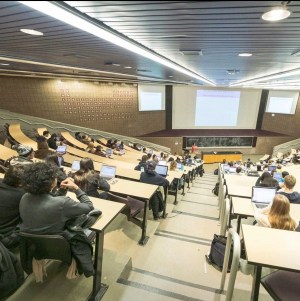
Walking through the grand hallways of the Ross School of Business, I was immediately struck by its prestigious and serious atmosphere. As a Mexican kid from a small farming community with big dreams, I couldn’t help but feel overwhelmed by the impressive surroundings and the brilliant minds surrounding me.

Ann Arbor, Michigan: University of Michigan, Ross School of Business

The Weight of Being Different

As I stepped into the bustling classroom on my first day as part of the inaugural executive MBA cohort from Los Angeles in August of 2012, I was enveloped by a sea of accomplished peers—each exuding a sense of belonging that I doubted I possessed.

The air was thick with the prestige of the institution, and I questioned whether I measured up.

These weren’t just classmates—they were titans in their fields. Published authors casually discussed their latest manuscripts. PhDs and MDs exchanged complex theories like trading cards. Representatives from Intel, the Air Force, the Navy, and Morgan Stanley networked effortlessly, their confidence filling the room like expensive cologne.

And there I was, clutching my new Michigan backpack like a lifeline, wondering: Will I survive in this competitive environment? Do I even deserve to be here?

The Moment Everything Shifted

Enter Professor David W. Wright—known to all as “Dr. Dave.”

What happened next lasted maybe three seconds, but changed my entire trajectory.

With a simple nod, his gaze met mine, transcending mere acknowledgment. At first, I wasn’t sure he was looking at me—I might have checked over my shoulder to see if he was nodding at someone else.

But no. That nod was for me.

It was a profound gesture—a silent declaration that I belonged in this esteemed space. In that single moment, my inner turmoil began to dissipate. Instead of disdain or dismissal, I was met with approval and a faint smile that said, “You’re exactly where you need to be.”

When Excellence Becomes Contagious

As Dr. Dave’s lecture began, something magical happened. I became completely engrossed in his commanding and captivating speaking style. His passion for Accounting—yes, Accounting—was so infectious that I forgot about everything else.

The outside world melted away. My insecurities quieted. Knowledge became my new currency.

When the lecture ended, I felt a newfound sense of belonging at Ross, despite my humble beginnings. Learning from the best gave me hope that I could reach great heights in the business world.

That nod became a symbol of acceptance, sparking a newfound confidence that would guide me throughout my journey.

The Transformation Was Real

Walking among my peers afterward, greeted by nods from faculty, I held my head high. I now understood the power of knowledge as the ultimate equalizer.

If I studied hard and made the most of this opportunity, the future held endless possibilities. I could achieve my goal of becoming a CEO.

Self-doubt had transformed into self-assurance. Imposter syndrome had been replaced by ambition.

In this arena of excellence, I had found my rightful place. ¡Vamos Azul!

The Leadership Lessons That Shaped a CEO

Reflecting on that pivotal moment in the grand hallways of Ross, I’ve distilled several game-changing leadership insights:

🌱 Your Background Is Your Superpower

Being different isn’t a disadvantage—it’s your competitive edge. My farming community roots brought perspectives that boardrooms desperately needed.

💪 Confidence Is Contagious (And So Is Doubt)

One person’s belief in you can ignite unstoppable momentum. As leaders, we must be Dr. Daves for others—offering that transformative nod of belonging.

🧠 Knowledge Levels Every Playing Field

No matter where you start, continuous learning can take you anywhere. In business, intellectual curiosity beats pedigree every time.

🔥 Transform Fear Into Fuel

Those butterflies in your stomach? Channel them into ambition. Imposter syndrome is just unrecognized potential waiting to explode.

🎯 Vision Becomes Reality

I had a clear goal: CEO. That North Star guided every decision, every late-night study session, every networking conversation.

🤝 Inclusion Unlocks Innovation

Creating environments where everyone feels valued isn’t just nice—it’s strategic. Diverse perspectives drive breakthrough results.


The truth is simple: Sometimes the smallest gestures—a nod, a smile, a moment of recognition—can unlock someone’s entire potential.

Today, as President & CEO of the Los Angeles City Employees Association and Employees Club of California, I carry Dr. Dave’s lesson forward. I look for opportunities to give others that same transformative nod, to help them see that they belong, that they have something unique to contribute.

Because we all deserve to walk through those hallways with our heads held high.

What “nod” do you need to give someone today?


From the avocado farms of San Diego County to the boardrooms of Los Angeles—this is what happens when someone believes in you before you believe in yourself.

Avocado Farm Lessons from an Engineer: Donald A. Smith

Growing up in Pauma Valley, California, my family lived below an avocado farm owned by Donald Smith, a retired engineer from the City of San Diego, as I recall. My Dad would sometimes do some work for him, and I would help him out. The orchard was a beautiful place, and being there made me feel like I was one with nature. But more than the peaceful landscape, what made the experience truly remarkable was the wisdom I got from Mr. Smith. His words of wisdom stayed with me over the years and shaped how I viewed life.

Mr. Smith had a unique view of life, and he often shared his thoughts with us. One of the quotes that stood out to me was when he said, “You have the desire to work, huh?” These words were spoken during one of the many times I helped my Dad in the orchard. The perceived enthusiasm I had for hard farm work was something he appreciated, and he would often praise me for it. This quote was a subtle reminder that having the desire to work was essential to achieving success in your endeavors.

One of the most impactful things Mr. Smith told me was that education was more valuable than money, cars, and even your home. He said, “They can take all your material possessions like your money, house, and car, but they can never take away your education. With it, you can always recalibrate and start again.” These words have stayed with me throughout my life, and they have been a constant reminder that education is one of the most valuable assets a person can have.

They can take all your material possessions like your money, house, and car, but they can never take away your education. With it, you can always recalibrate and start again.

Donald A. Smith

Mr. Smith was an incredibly generous man, and he always appreciated hard work and dedication. One time, after seeing me help my Dad all day in the orchard, he gave me a Hershey bar and a crisp new $50 bill as a token of his appreciation. This gesture showed me how much he valued the contribution that hard work made, and it made me feel proud of my efforts, no matter how much I disliked farming work.

Donald Smith may have passed away a long time ago, but his words of wisdom still ring true to this day. As a young boy, I may not have fully appreciated his words, but now as an adult, they have become a source of guidance in how I live my life. The understanding that my education is an asset that no one can take away from me has helped me through some tough times in my life. I’m grateful for Mr. Smith’s influence, and even after all these years, I can still hear his thunderous laughter echoing through the avocado and citrus orchards of Pauma Valley.

Leadership lessons:

  1. Recognize the value of enthusiasm and work ethic: Mr. Smith’s appreciation for the enthusiasm for hard farm work serves as a reminder that having the desire to work is essential for achieving success. Leaders should value and encourage enthusiasm in their team members, recognizing it as a driving force for achieving goals.
  2. Prioritize education as a valuable asset: Mr. Smith’s belief that education is more valuable than material possessions highlights the long-lasting benefits of continuous learning. Leaders should encourage a culture of learning within their organizations and emphasize the importance of personal and professional development.
  3. Appreciate and reward dedication: Mr. Smith’s gesture of giving a Hershey bar and $50 bill as a token of appreciation demonstrates the importance of recognizing and rewarding hard work. Leaders should acknowledge and appreciate the dedication of their team members, fostering a positive and motivating work environment.
  4. Share wisdom and experiences: Mr. Smith’s words of wisdom stayed with Robert Larios over the years and shaped their view of life. This highlights the power of sharing knowledge and experiences as a leader. Leaders should take the time to mentor and guide their team members, passing on their wisdom and helping them grow both personally and professionally.
  5. Value the connection with nature: The peaceful landscape of the avocado orchard made Larios feel connected with nature. This serves as a reminder for leaders to appreciate the natural world and incorporate elements of nature into the work environment, fostering a sense of calmness and well-being among team members.

A Moment of Pride & Gratitude: 23 Years as an American Citizen

Twenty three years ago, I remember the feeling of elation and certainty that came with becoming a Citizen of the United States. As I repeated each word after the judge, taking my oath to become an American Citizen, I felt like all my life up until this moment had been leading me here.

As I said “I hereby declare on oath that I absolutely and entirely renounce and abjure all allegiance and fidelity to any foreign prince, potentate, state or sovereignty”, chills ran down my spine as if something inside me was coming alive for the first time. When I swore to “support and defend the Constitution and laws of the United States against all enemies” it felt like a weight had been lifted off me – suddenly everything made sense in a way it hadn’t before; this is where I belonged.

“My oath didn’t just give me citizenship – it gave me hope for a better future built upon justice and equality for everyone living within these borders.”

-Robert Larios

It wasn’t until later when reflecting on what exactly those words meant – what they entailed – that their true significance hit home for me: bearing arms on behalf of my country if required by law; performing non-combatant service in its Armed Forces; doing work of national importance under civilian direction… It was then that tears began streaming down my face as these vows sunk in. Becoming an American Citizen meant much more than just having another passport; it represented freedom from oppression, providing safety not only for myself but also generations to come.

My oath didn’t just give me citizenship – it gave me hope for a better future built upon justice and equality for everyone living within these borders. Twenty three years ago, something inside stirred within me – reminding us why we left our homeland so many years earlier seeking refuge here in America…and now finally finding peace at last.

Leadership Lessons

This passage offers several valuable leadership lessons:

The Power of Vision: The feeling of elation and certainty implies a clear vision for the future. Great leaders have a strong sense of direction and inspire others with their vision.

Perseverance: The journey to becoming a citizen likely involved overcoming numerous obstacles. Leaders must display resilience and determination, never losing sight of their goals, no matter the challenges.

Embrace Change: Becoming a citizen signifies a significant change. Effective leaders are adaptable, unafraid to embrace change and use it as an opportunity for growth.

Value of Commitment: Taking an oath shows a deep commitment. Leaders should be committed to their cause, their team, and their responsibilities.

Sense of Purpose: The feeling that life had been leading to this moment suggests a strong sense of purpose. Leaders need to have a strong ‘why’ that drives their actions and decisions.

Belonging: The sense of becoming part of a larger community resonates with the leadership principle of fostering a sense of belonging within a team or organization. Good leaders create environments where everyone feels valued and included.

From Defeat to Determination: My McDonald’s Experience

In 1993, I eagerly started my summer job at McDonald’s, only to be let go after just three days. The manager knew I would be leaving for college in the fall and needed someone who could commit long-term. Looking back, I should have mentioned my enrollment at the University of Southern California during the interview. I can’t help but wonder if he was jealous that I, a fellow Latino, was pursuing higher education at USC, something uncommon for our community. Despite my disappointment, I returned home feeling defeated.

But just a few days later, I received a life-changing phone call from Mrs. Echevarria, the Migrant Education Coordinator at Pauma Elementary School’s migrant education program. She offered me a teaching position for their summer school, which catered to the children of farm workers. Without hesitation, I accepted, seeing it as an opportunity to not only teach academic subjects, but also help these children adjust to a new culture in the Pauma Valley citrus and avocado region.

That summer transformed me in profound ways. It gave me a newfound respect and understanding for those facing daily struggles, struggles that mirrored my own experiences as an immigrant boy. It also deepened my appreciation for the importance of education in providing equal opportunities, regardless of one’s background or language. It became clear to me why higher education mattered so much, and why denying someone access based on their economic or social status was unjust.

It became clear to me why higher education mattered so much, and why denying someone access based on their economic or social status was unjust.

-Robert Larios

When August came and it was time to leave for USC, my heart felt heavy yet strong. My brief time as a teacher in Pauma’s migrant education program had taught me lessons beyond what any textbook could offer, lessons I will never forget.

Continue reading “From Defeat to Determination: My McDonald’s Experience”