From Fresh Popcorn to Golden Corvettes: Reliving My First NCAA College Football Game in 1985 with OJ Simpson.

It was a sunny autumn day in 1985, and I was just ten years old. I stood outside the iconic LA Coliseum with a group of other kids from Pauma Elementary School. We were there for our very first college football game, thanks to my mentor, Bud Bradford, who had invited us along with his wife Penny and son Brad. College football was a tradition for them – Bud had been an alum at Stanford University, and Penny had gone to USC.

As we approached the gate, the electric atmosphere within the Coliseum reached us, the sound of the crowd’s roar splashing across our faces. The air was thick with the aroma of fresh popcorn, and the colorfully clothes people in a hurry to get inside the venue through the gates. But it was the sight of a radiant golden Corvette next to the tunnel that leads into the field that stole the show, glistening under the Californian sun, its license plate boldly declaring “JUICE.”

I couldn’t resist approaching the car, marveling at its dazzling exterior. Lost in admiration, I pondered who could be the fortunate owner of this magnificent beast. Suddenly, a tall African man in an impeccable suit interrupted my thoughts.

it was the sight of a radiant golden Corvette next to the tunnel that leads into the field that stole the show, glistening under the Californian sun, its license plate boldly declaring “JUICE.”

Robert Larios

“Son, that beauty is mine,” he declared with a deep, smooth voice. I looked up in surprise, meeting the gaze of this tall man — to me he was the man from the Hertz Television commercials. He extended his hand towards me, “I’m OJ Simpson, pleased to make your acquaintance,” with a big smile from ear to ear. “Here for the game? Who are you cheering for?” He asked. I said, “I am not sure, the team that is going to win?” “Smart answer!” He chuckled. “Put up your fingers like this”, he put his fingers up like the peace sign. “Do that during the game, and you will see who the winner will be. Fight On, little man!”

Stunned and in awe, I found myself shaking hands with someone famous. Of course, at the time, I didn’t know he was also considered to be one of USC’s all-time greatest athletes and beloved by Los Angeles at the time. In that moment, amidst the cheers and the excitement, my heart pledged allegiance to the USC Trojans forever. That shimmering golden Corvette, and its owner, became the indelible memory that defined my inaugural college football experience and my love for USC.

In an intense clash on November 23, 1985, USC emerged victorious over UCLA with a 17-13 score.


Here are some leadership and life lessons that can be learned from my experience:

1. Generosity and kindness can lead to unforgettable experiences for others.

2. Mentors and positive role models can introduce young people to new experiences and traditions.

3. Traditions and values can be passed down from generation to generation.

4. Paying attention to the small details can make an experience more memorable and impactful.

5. Approachable and friendly behavior can make a difference in someone’s life.

6. Famous personalities and celebrities can influence others through their actions and attitude.

7. Finding common ground can bring people together, regardless of their background or status.

8. Engaging with people and being open to new experiences can create treasured memories.

9. A positive attitude and a sense of humor can make all the difference in how people perceive you.

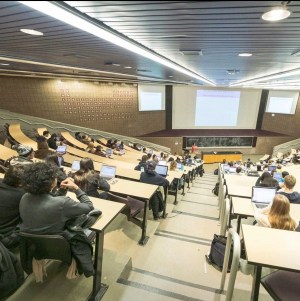
The Nod That Changed Everything: From Imposter to CEO

Sometimes the smallest gestures unlock the biggest transformations.

**📝 Updated August 24, 2025:** This post has been significantly expanded to include the pivotal details of my first encounter with Professor David W. Wright and the profound impact of “the nod that changed everything.” The updated version includes enhanced details to better capture this transformative moment in my leadership journey.

*Originally published: October 5, 2023*

Walking through the grand hallways of the Ross School of Business, I was immediately struck by its prestigious and serious atmosphere. As a Mexican kid from a small farming community with big dreams, I couldn’t help but feel overwhelmed by the impressive surroundings and the brilliant minds surrounding me.

Ann Arbor, Michigan: University of Michigan, Ross School of Business

The Weight of Being Different

As I stepped into the bustling classroom on my first day as part of the inaugural executive MBA cohort from Los Angeles in August of 2012, I was enveloped by a sea of accomplished peers—each exuding a sense of belonging that I doubted I possessed.

The air was thick with the prestige of the institution, and I questioned whether I measured up.

These weren’t just classmates—they were titans in their fields. Published authors casually discussed their latest manuscripts. PhDs and MDs exchanged complex theories like trading cards. Representatives from Intel, the Air Force, the Navy, and Morgan Stanley networked effortlessly, their confidence filling the room like expensive cologne.

And there I was, clutching my new Michigan backpack like a lifeline, wondering: Will I survive in this competitive environment? Do I even deserve to be here?

The Moment Everything Shifted

Enter Professor David W. Wright—known to all as “Dr. Dave.”

What happened next lasted maybe three seconds, but changed my entire trajectory.

With a simple nod, his gaze met mine, transcending mere acknowledgment. At first, I wasn’t sure he was looking at me—I might have checked over my shoulder to see if he was nodding at someone else.

But no. That nod was for me.

It was a profound gesture—a silent declaration that I belonged in this esteemed space. In that single moment, my inner turmoil began to dissipate. Instead of disdain or dismissal, I was met with approval and a faint smile that said, “You’re exactly where you need to be.”

When Excellence Becomes Contagious

As Dr. Dave’s lecture began, something magical happened. I became completely engrossed in his commanding and captivating speaking style. His passion for Accounting—yes, Accounting—was so infectious that I forgot about everything else.

The outside world melted away. My insecurities quieted. Knowledge became my new currency.

When the lecture ended, I felt a newfound sense of belonging at Ross, despite my humble beginnings. Learning from the best gave me hope that I could reach great heights in the business world.

That nod became a symbol of acceptance, sparking a newfound confidence that would guide me throughout my journey.

The Transformation Was Real

Walking among my peers afterward, greeted by nods from faculty, I held my head high. I now understood the power of knowledge as the ultimate equalizer.

If I studied hard and made the most of this opportunity, the future held endless possibilities. I could achieve my goal of becoming a CEO.

Self-doubt had transformed into self-assurance. Imposter syndrome had been replaced by ambition.

In this arena of excellence, I had found my rightful place. ¡Vamos Azul!

The Leadership Lessons That Shaped a CEO

Reflecting on that pivotal moment in the grand hallways of Ross, I’ve distilled several game-changing leadership insights:

🌱 Your Background Is Your Superpower

Being different isn’t a disadvantage—it’s your competitive edge. My farming community roots brought perspectives that boardrooms desperately needed.

💪 Confidence Is Contagious (And So Is Doubt)

One person’s belief in you can ignite unstoppable momentum. As leaders, we must be Dr. Daves for others—offering that transformative nod of belonging.

🧠 Knowledge Levels Every Playing Field

No matter where you start, continuous learning can take you anywhere. In business, intellectual curiosity beats pedigree every time.

🔥 Transform Fear Into Fuel

Those butterflies in your stomach? Channel them into ambition. Imposter syndrome is just unrecognized potential waiting to explode.

🎯 Vision Becomes Reality

I had a clear goal: CEO. That North Star guided every decision, every late-night study session, every networking conversation.

🤝 Inclusion Unlocks Innovation

Creating environments where everyone feels valued isn’t just nice—it’s strategic. Diverse perspectives drive breakthrough results.


The truth is simple: Sometimes the smallest gestures—a nod, a smile, a moment of recognition—can unlock someone’s entire potential.

Today, as President & CEO of the Los Angeles City Employees Association and Employees Club of California, I carry Dr. Dave’s lesson forward. I look for opportunities to give others that same transformative nod, to help them see that they belong, that they have something unique to contribute.

Because we all deserve to walk through those hallways with our heads held high.

What “nod” do you need to give someone today?


From the avocado farms of San Diego County to the boardrooms of Los Angeles—this is what happens when someone believes in you before you believe in yourself.

Avocado Farm Lessons from an Engineer: Donald A. Smith

Growing up in Pauma Valley, California, my family lived below an avocado farm owned by Donald Smith, a retired engineer from the City of San Diego, as I recall. My Dad would sometimes do some work for him, and I would help him out. The orchard was a beautiful place, and being there made me feel like I was one with nature. But more than the peaceful landscape, what made the experience truly remarkable was the wisdom I got from Mr. Smith. His words of wisdom stayed with me over the years and shaped how I viewed life.

Mr. Smith had a unique view of life, and he often shared his thoughts with us. One of the quotes that stood out to me was when he said, “You have the desire to work, huh?” These words were spoken during one of the many times I helped my Dad in the orchard. The perceived enthusiasm I had for hard farm work was something he appreciated, and he would often praise me for it. This quote was a subtle reminder that having the desire to work was essential to achieving success in your endeavors.

One of the most impactful things Mr. Smith told me was that education was more valuable than money, cars, and even your home. He said, “They can take all your material possessions like your money, house, and car, but they can never take away your education. With it, you can always recalibrate and start again.” These words have stayed with me throughout my life, and they have been a constant reminder that education is one of the most valuable assets a person can have.

They can take all your material possessions like your money, house, and car, but they can never take away your education. With it, you can always recalibrate and start again.

Donald A. Smith

Mr. Smith was an incredibly generous man, and he always appreciated hard work and dedication. One time, after seeing me help my Dad all day in the orchard, he gave me a Hershey bar and a crisp new $50 bill as a token of his appreciation. This gesture showed me how much he valued the contribution that hard work made, and it made me feel proud of my efforts, no matter how much I disliked farming work.

Donald Smith may have passed away a long time ago, but his words of wisdom still ring true to this day. As a young boy, I may not have fully appreciated his words, but now as an adult, they have become a source of guidance in how I live my life. The understanding that my education is an asset that no one can take away from me has helped me through some tough times in my life. I’m grateful for Mr. Smith’s influence, and even after all these years, I can still hear his thunderous laughter echoing through the avocado and citrus orchards of Pauma Valley.

Leadership lessons:

  1. Recognize the value of enthusiasm and work ethic: Mr. Smith’s appreciation for the enthusiasm for hard farm work serves as a reminder that having the desire to work is essential for achieving success. Leaders should value and encourage enthusiasm in their team members, recognizing it as a driving force for achieving goals.
  2. Prioritize education as a valuable asset: Mr. Smith’s belief that education is more valuable than material possessions highlights the long-lasting benefits of continuous learning. Leaders should encourage a culture of learning within their organizations and emphasize the importance of personal and professional development.
  3. Appreciate and reward dedication: Mr. Smith’s gesture of giving a Hershey bar and $50 bill as a token of appreciation demonstrates the importance of recognizing and rewarding hard work. Leaders should acknowledge and appreciate the dedication of their team members, fostering a positive and motivating work environment.
  4. Share wisdom and experiences: Mr. Smith’s words of wisdom stayed with Robert Larios over the years and shaped their view of life. This highlights the power of sharing knowledge and experiences as a leader. Leaders should take the time to mentor and guide their team members, passing on their wisdom and helping them grow both personally and professionally.
  5. Value the connection with nature: The peaceful landscape of the avocado orchard made Larios feel connected with nature. This serves as a reminder for leaders to appreciate the natural world and incorporate elements of nature into the work environment, fostering a sense of calmness and well-being among team members.

A Moment of Pride & Gratitude: 23 Years as an American Citizen

Twenty three years ago, I remember the feeling of elation and certainty that came with becoming a Citizen of the United States. As I repeated each word after the judge, taking my oath to become an American Citizen, I felt like all my life up until this moment had been leading me here.

As I said “I hereby declare on oath that I absolutely and entirely renounce and abjure all allegiance and fidelity to any foreign prince, potentate, state or sovereignty”, chills ran down my spine as if something inside me was coming alive for the first time. When I swore to “support and defend the Constitution and laws of the United States against all enemies” it felt like a weight had been lifted off me – suddenly everything made sense in a way it hadn’t before; this is where I belonged.

“My oath didn’t just give me citizenship – it gave me hope for a better future built upon justice and equality for everyone living within these borders.”

-Robert Larios

It wasn’t until later when reflecting on what exactly those words meant – what they entailed – that their true significance hit home for me: bearing arms on behalf of my country if required by law; performing non-combatant service in its Armed Forces; doing work of national importance under civilian direction… It was then that tears began streaming down my face as these vows sunk in. Becoming an American Citizen meant much more than just having another passport; it represented freedom from oppression, providing safety not only for myself but also generations to come.

My oath didn’t just give me citizenship – it gave me hope for a better future built upon justice and equality for everyone living within these borders. Twenty three years ago, something inside stirred within me – reminding us why we left our homeland so many years earlier seeking refuge here in America…and now finally finding peace at last.

Leadership Lessons

This passage offers several valuable leadership lessons:

The Power of Vision: The feeling of elation and certainty implies a clear vision for the future. Great leaders have a strong sense of direction and inspire others with their vision.

Perseverance: The journey to becoming a citizen likely involved overcoming numerous obstacles. Leaders must display resilience and determination, never losing sight of their goals, no matter the challenges.

Embrace Change: Becoming a citizen signifies a significant change. Effective leaders are adaptable, unafraid to embrace change and use it as an opportunity for growth.

Value of Commitment: Taking an oath shows a deep commitment. Leaders should be committed to their cause, their team, and their responsibilities.

Sense of Purpose: The feeling that life had been leading to this moment suggests a strong sense of purpose. Leaders need to have a strong ‘why’ that drives their actions and decisions.

Belonging: The sense of becoming part of a larger community resonates with the leadership principle of fostering a sense of belonging within a team or organization. Good leaders create environments where everyone feels valued and included.

From Defeat to Determination: My McDonald’s Experience

In 1993, I eagerly started my summer job at McDonald’s, only to be let go after just three days. The manager knew I would be leaving for college in the fall and needed someone who could commit long-term. Looking back, I should have mentioned my enrollment at the University of Southern California during the interview. I can’t help but wonder if he was jealous that I, a fellow Latino, was pursuing higher education at USC, something uncommon for our community. Despite my disappointment, I returned home feeling defeated.

But just a few days later, I received a life-changing phone call from Mrs. Echevarria, the Migrant Education Coordinator at Pauma Elementary School’s migrant education program. She offered me a teaching position for their summer school, which catered to the children of farm workers. Without hesitation, I accepted, seeing it as an opportunity to not only teach academic subjects, but also help these children adjust to a new culture in the Pauma Valley citrus and avocado region.

That summer transformed me in profound ways. It gave me a newfound respect and understanding for those facing daily struggles, struggles that mirrored my own experiences as an immigrant boy. It also deepened my appreciation for the importance of education in providing equal opportunities, regardless of one’s background or language. It became clear to me why higher education mattered so much, and why denying someone access based on their economic or social status was unjust.

It became clear to me why higher education mattered so much, and why denying someone access based on their economic or social status was unjust.

-Robert Larios

When August came and it was time to leave for USC, my heart felt heavy yet strong. My brief time as a teacher in Pauma’s migrant education program had taught me lessons beyond what any textbook could offer, lessons I will never forget.

Continue reading “From Defeat to Determination: My McDonald’s Experience”

Leadership Lessons: From Traversing a Border to Living the American Dream

Discover the powerful leadership lessons I learned as a 1 1/2-year-old crossing the Mexican-American border with my parents. Please read about the experience in the previous post.

Here, I’ll share their incredible journey and the invaluable insights it taught me.

  1. Embrace Courage and Determination: Witnessing my parents’ bravery in the face of adversity taught me the importance of taking risks and staying committed as a leader.
  2. Seek Help without Hesitation: Successful leaders understand that seeking assistance is a sign of strength, not weakness. Learn from my parents’ decision to ask for help when needed.
  3. Show Gratitude: I am forever grateful for the sacrifices my parents made to provide me with a better future. As a leader, it’s vital to appreciate and acknowledge those who contribute to your success.
  4. Envision Your Path: Take inspiration from my parents’ unwavering pursuit of a better future. Leaders must have a clear vision that guides their actions and motivates others.
  5. Harness Optimism and Inspire Hope: Through the hardships, my parents never lost hope. As a leader, maintaining optimism and instilling hope within your team is crucial, especially in challenging times.

From Traversing a Border to Living the American Dream

As a 1 1/2 year old, I was carried in my parents’ arms as we crossed the treacherous Mexican-American border. Despite the dangers and risks, my parents were determined to provide me with a better life. However, their journey was not without challenges. They narrowly escaped being caught by Border Patrol agents, but their determination never faltered. Instead, they made the brave decision to seek help for me, which led to an unexpected encounter with a stranger who provided them with crucial assistance. It was this man who dropped us off in Pauma Valley, where my life in the United States began. Looking back on this incredible journey, it’s impossible not to feel grateful for the sacrifices that my parents made for me. Their unwavering dedication to building a better future for their family is a testament to the human spirit and the power of hope.

Lessons Learned from 25 Years at the Employees Club of California

As someone who has spent 25 years working for the Employees Club of California, I am often asked about what makes me qualified to hold the position of CEO. It’s a fair question – after all, I started as an entry-level employee with no experience. But along the way, I’ve learned some valuable lessons that have allowed me to grow and succeed in my career. In this blog post, I’d like to share four of the most important lessons I’ve learned in my 25 years at the Employees Club of California.

Lesson 1: Be grateful for what you have, rather than dwelling on the things you don’t have. Throughout my career, I have learned the importance of being grateful for the opportunities and resources I have, rather than focusing on what I lack. This mindset has allowed me to approach challenges with a positive attitude, and to be more creative and resourceful when finding solutions.

Lesson 2: Save the people rather than saving the numbers. Of course, financial performance is important to any business. But I firmly believe that what truly matters is taking care of the employees who make the company successful in the first place. Taking care of people means investing in their development, valuing their contributions, and creating a culture of mutual respect and support.

Lesson 3: The path to success includes learning, growth, turmoil, and change. No one achieves true success without going through some difficult times and learning valuable lessons along the way. It’s important to embrace discomfort, challenge your assumptions, and keep an open mind to new ideas, even if they deviate from your original plan.

Lesson 4: Support networks play an important role in success. No one can achieve success entirely on their own. Whether it’s mentors, colleagues, or family members, having a support network can make all the difference during times of uncertainty and difficulty. A word of encouragement, a fresh perspective, or a helping hand can provide invaluable support during times of stress.

As someone who has spent 25 years working for the Employees Club of California, I am often asked about what makes me qualified to hold the position of CEO. It’s a fair question – after all, I started as an entry-level employee with no experience.

-Robert Larios

As I reflect on my 25 years at the Employees Club of California, I realize how grateful I am for the opportunities and challenges I’ve faced along the way. These four lessons – gratitude, investment in people, learning and growth, and support networks – have been the cornerstones of my success. I hope these lessons can be of help to others who are also striving to succeed in their careers, and I look forward to continuing to grow and learn as we move forward.

The Power of Redemption is Within You

As we celebrate Good Friday, followed by Easter and reflect on our lives, let us remember the power of redemption and self-growth within each and every one of us! No matter your beliefs, this is a day for embracing self-improvement. We can choose to use our mistakes as opportunities for growth and renewal—a chance to accept ourselves deeply and attempt to become arguably better than who we once were. As we venture through this journey of life, let’s commit ourselves to mindful effort and perseverance in order to uncover each individual’s personal source of redemption. With passion, dedication, and optimism, may every single person strive to be their best selves both today and always!

Celebrating the Legacy of César Chávez: Remembering my Dad’s Story Further

Growing up, my Dad Rafael Larios had always been fascinated by the stories of César Chávez. He admired his courage and unwavering commitment to justice. When he was 14 years old, Dad had the opportunity to hear Chávez speak in California and witness firsthand the power of his message. Deeply inspired, Dad decided that he wanted to make a difference too – so he dedicated himself to working endlessly in the fields for over half a century. As time went on, Dad’s hard work eventually paid off as he became a successful avocado and citrus farmer in Pauma Valley. He often said that it wouldn’t have been possible without César’s guidance and encouragement – something which kept him going even when times were tough. From long days out in the field under scorching sun, through sleepless nights tending to crops – Dad never once gave up hope or lost sight of what drove him forward; Justice for all farm workers no matter their situation or background. My father’s story teaches us that change is not only possible but also achievable if we stay true to our values and never give up on our dreams – this is why I think it is important that here in California we commemorate César Chavez’ legacy each year; To remind ourselves how one person can leave such an indelible mark on society with their tireless efforts – much like my Father did!