A Juneteenth Reflection on Carrie Adelia Gabriel
Today is Juneteenth. I have been sitting with that all morning, because there is one story I cannot separate from this date, and it belongs to a woman named Carrie Adelia Gabriel.
I never met Fred Rogers. I wish I had. He has been one of my mentors from a distance for years, a role model I never shook hands with. I follow his teachings through what he left behind, and one of them changed how I think about people who have lived long, hard, faithful lives.
Mister Rogers had a habit. When he came across someone who had endured something hard, a long illness, a disability, a life that asked more of them than most lives ask, he would turn the moment around. He would ask them to pray for him. People assumed he did it out of kindness, a way to make the other person feel useful. He always corrected that. He said he asked because he believed people who had carried that much were closer to God than he was. Their prayers carried more weight. He wanted that intercession for himself.
I adopted that belief a long time ago, in my own way. I ask people who have lived long, full lives, walking close to Heaven’s door, to pray for me. Not to make them feel good. Because I believe it.
This year I got to ask that of Carrie.
Carrie started working for the City of Los Angeles in 1946 with LAPD. She was a young Black woman walking into a workplace where the doors open to her were few, eighty one years after the Union Army rode into Galveston and read General Order Number 3 aloud, the order Juneteenth marks. Freedom on paper and freedom in practice are not the same thing, and the distance between them is measured in stories like Carrie’s. She walked through a door that was rarely open to someone who looked like her.
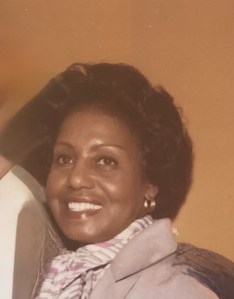
Once she was through that door, she stayed thirty two years. She built a reputation as someone sharp, dependable, ahead of her time, eventually rising to senior data processing technician, helping lay groundwork for systems the City still leans on today. She retired in 1978 and did not slow down for a second. Private industry. Volunteering. Senior centers. Family. Friends she called just to hear their voice.
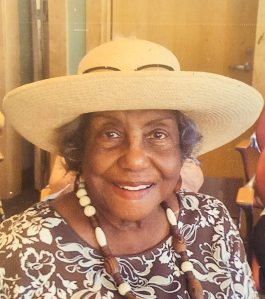
I met Carrie four years ago, days before her 100th birthday, both of us in masks, the pandemic still very much present in every room we walked into. I expected to meet someone frail. Instead I met a woman with no walker, no glasses, cooking her own meals, ready to debate politics with me if I gave her the opening. I did not give her the opening. I just listened. I learned more Los Angeles history in that one conversation than I had in years of living here.
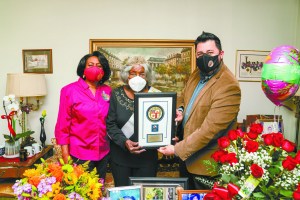
After the visit, Carrie started writing to me. Handwritten letters. Cards for no occasion at all, just because she was thinking of someone. I wrote back. A correspondence grew between a CEO and a centenarian who owed me nothing and chose to stay in touch anyway. That tells you everything about who she was.
There was something unmistakably spiritual about Carrie. Quiet, not performed. The kind of faith that fills a room without announcing itself. So one day, thinking of Mister Rogers, I asked her directly.
Pray for me, Carrie.
–Robert Larios
She laughed. She told me she already had been.
Of course she had.
Carrie turned 104 this past January.
She passed away on March 31, following a fall. The City she served for 32 years lost a daughter. I lost a friend, and a correspondent, and a woman I had quietly been counting on to keep me in her prayers.
I keep coming back to the timing of all this. Juneteenth is a day about a gap, the gap between when freedom was declared and when it actually reached the people it was meant for. Carrie lived her whole life inside that gap and the long, slow closing of it. She did not wait for every door to open before she walked through the ones that did. She built a 32 year career, a full retirement, a circle of people she loved and stayed in touch with, and a faith strong enough that a CEO half her age would ask her to pray for him and mean it completely.
I do not think that arrangement ends just because she is no longer here to write the letters. I think a person who lived 104 years the way Carrie did, with that much faith, that much grace, that much fight, only gets a clearer line to Heaven once she arrives.
She did not wait for every door to open before she walked through the ones that did.
Thank you, Mister Rogers, for teaching me to ask. Thank you, Carrie, for saying yes.
Today is Juneteenth. I am still counting on her.


 Robert Larios